No.014
My Five Years of University — Ramblings of an Atypical Business Student
Translated from the Chinese read the original


Before the Main Text:
One weekend afternoon in February, I sat at the Manner Coffee on the ground floor of Bohua, chin half-propped on my hand, staring blankly at the floor-to-ceiling window before me, at the bare winter branches of the plane trees outside faintly tipped with new green — when out of nowhere, from the bottom of my heart, rose a spell of ease like summer rain.
It struck me suddenly that through the breakneck two and a half years since changing majors at the end of 2019, I had been like a spinning top driving itself, whirling forward without a moment’s pause along a tightrope that forgave almost no error. Not until certain early mornings at the end of last year, when the little red dots surfacing one after another at the corner of my application inbox’s icon told me the offers had come at last, did a joy shot through with enormous unreality scatter my daze and unstring, finally, the tautness in my chest.


The Urge to “Escape” and a Dream of Honglou

And so I finally had time to look back over my five years of university. Through the filter of the years I could just make out that slightly helpless, faintly bookish small-town exam grinder, newly arrived at Xinglongshan, slowly learning critical thought, slowly learning to look at a question through the habits of different disciplines and different languages. It was a struggle to break through layer upon layer of information cocoons, a direction that had nothing whatever to do with the university’s official curriculum, an outright desertion from an education that hypnotizes like religion.
I can state responsibly that I am nothing like a typical business student. Freshman year’s shallow taste of traditional engineering fed an inexplicable urge in me to “escape”; ever since, whenever I find myself in any environment where worth is judged by a single yardstick, where outcomes are king, where the individual voice goes unheard, an INTJ’s physical discomfort rises unbidden, and I set about planning my exit. Regrettably, on the academic side, those attempted exits failed almost every time for the first two years — and I am deeply grateful to my dear alma mater for finally granting me, just as I was verging on the big sad, one chance to choose my major, and my life, over again.
An overwrought little passage has been lying in my notes app for a very long time:
Six years ago, when the rejection letter from Wuhan University’s independent admissions arrived, I watched the last of the sunset spill across the edge of the sky, leaned against a bedside papered with postcards of the Cherry Blossom Rooftop, and felt something break inside me.
Five years ago, on the evening the Taishan College computer-science-track interview ended, I sat in the back row of a jolting bus, felt the warmth of a blazing violet sky reflected on my cheek, and quietly wrote in my notes: “Remember this moment of humiliation.”
Four years ago, at half past six in the evening, in a downpour mixed with hail, I learned that Nishan College and the School of Literature would never be mine, and took leave at last of that book-drunk literary youth at the bottom of my heart.
After that, a long, long silence.
Sometimes I am glad I never did transfer into the Chinese department. Knowing my style, a few weeks of classes and I would surely have tired of those old paper-piles vast as mist and cloud and turned to fiddling with some new little scheme — after all, my train of thought has always moved like my footwork when piloting an ADC in the heat of a fight: flickering, drifting, impossible to pin down.
Even though I have said goodbye to the communal living I liked least in my undergraduate years, and put distance between myself and dormitory conditions benchmarked to the 1980s, I still miss Hongjialou terribly. The purple-leaf plums and lilacs in the garden before Building 7, unfading through all four seasons; the Xiaoqing River to the southeast, winding its crooked way north — years from now, they may all be memories I reach for in haunted dreams and cannot touch. “The dusk drum and the dawn bell startle awake the world’s seekers of fame and gain; the chant of sutras and the Buddha’s name call back the dreamers adrift on the sea of suffering” (暮鼓晨钟惊醒世间名利客,经声佛号唤回苦海梦迷人). I can never possess youth and the feeling of youth at the same time.
On many Hongjialou nights I changed into a sweatshirt and walked the second floor of the men’s dormitory from its easternmost end to its westernmost, past one half-closed door after another — from the low murmur of foreign texts read aloud, to game microphones at full boil, to the leaves of the little bamboo grove outside streaming along the sound of the wind, to the hushed great garden beside the classroom building, to the faint, far-off footfalls and shouts of the track. I ran lap after lap, so long it felt like passing through many lives, and I melted into a lonely, breakable dream.


The “Internship Grind King” Makes Peace with Himself

Many friends know me as the “internship grind king,” and true enough: eight undergraduate internships unfolding down a LinkedIn page do deliver a small business-school shock. But the image also owes much to two years of selective reporting on a dull life in my WeChat Moments. Only when complaints reached me — “opening your Moments is where my anxiety starts” — did I realize this was no good impression to leave. From now on I will transmit less anxiety, and share instead more of the lovely instants of living that my camera manages to hold still.
Yet I did not run up so many internships to pad a number. It was precisely because I was as lost as every friend who first sets foot in finance, dizzied by the vast branching of careers ahead: the breadth business covers and the fineness of its subdivisions are far more intricate than any MMORPG I have ever played.
My business career began when I took up the double degree in finance; the first turning point was the Deloitte Club two years ago, and after that came one new field upon another. Having traversed audit, investment banking, consulting, venture capital, internet strategy, and games, I can say I at last fully understood what a former boss at Mercer meant by the complete storyline of an excellent résumé. It was exactly this untidy, fork-riddled, wildly overgrown working path that witnessed the incomparable joy of finding the field that truly makes the heart leap.
Not long ago I read of the Yale trap in Excellent Sheep: fail to stay “excellent,” and you are “fallen.” What came to mind were the strategy consultancies and the foreign investment banks, so practiced at drawing business students of top pedigree with glittering Big Names and vanishing acceptance rates. Those exceedingly clever but directionless minds usually begin absorbing the Open Day carpet-bombing of the great houses in freshman year, then — with astonishing unanimity — take dead aim at MBB, the BBs, the big foreign buy-side. Every step before graduation must land firm and sure: Club, Competition, Off-cycle, Summer, Return, until at last, a total package of no less than a hundred thousand dollars secured on Wall Street, they can let out a long breath and settle into the seat of the elite.
At home, the phenomenon is sharpest among business undergraduates of the top-4 universities, because one of the most important functions of China’s gaokao system is to sieve out the intellectual prodigies of the common class. The root difference between the Hengshui model and RDFZ, the high school affiliated to Renmin University, is this: on the game map, for the former, entering university means starting from zero, rerolling a new game; for the latter, it merely carries the earlier plot forward — the entrance to a side quest, nothing more.
So, arriving alike at Tsinghua, Peking, Fudan, and Jiaotong, some are standing at the finish line already, knowing clearly from family which direction of development will be most perfect for them and which key points to mind; while the far more numerous common-born prodigies, once free of the high-pressure “concentration-camp environment,” walk straight into a fresh baptism of elitist values. These clever people have not yet grasped one simple truth: the exam-oriented high school is a narrow, real-life MMO map — once it fails to show you, at the level of the whole board, what a given step means, then the moment you leave that stage, everything resets to zero.
If even the top-4 must walk on ice so thin, my own undergraduate name was less sufficient still to buy me an ideal future in finance, an industry perched at the very apex of Title-worship. The utterly different recruiting logics of day-to-day internships and autumn campus hiring sank me into a long self-entanglement, aspirations high and hands unequal to them, and last year’s summer in audit at EY dealt me one good solid blow to the head: at this point in time, without resources of your own to bring, a mid-tier 985 undergraduate does not get into a top institution. Two days later I fled audit, hasty and disheveled. On the afternoon I was about to leave Suzhou, I ordered a bowl of vegetarian noodles at Hanshan Temple, and was poking at the floating topping with my chopsticks when the call came from Brother Bin at Ant, and a smile surfaced at the corners of my mouth, little by little. In that moment, the erstwhile “internship grind king” finally gave up the chase after top financial institutions, and chose to make peace with himself.
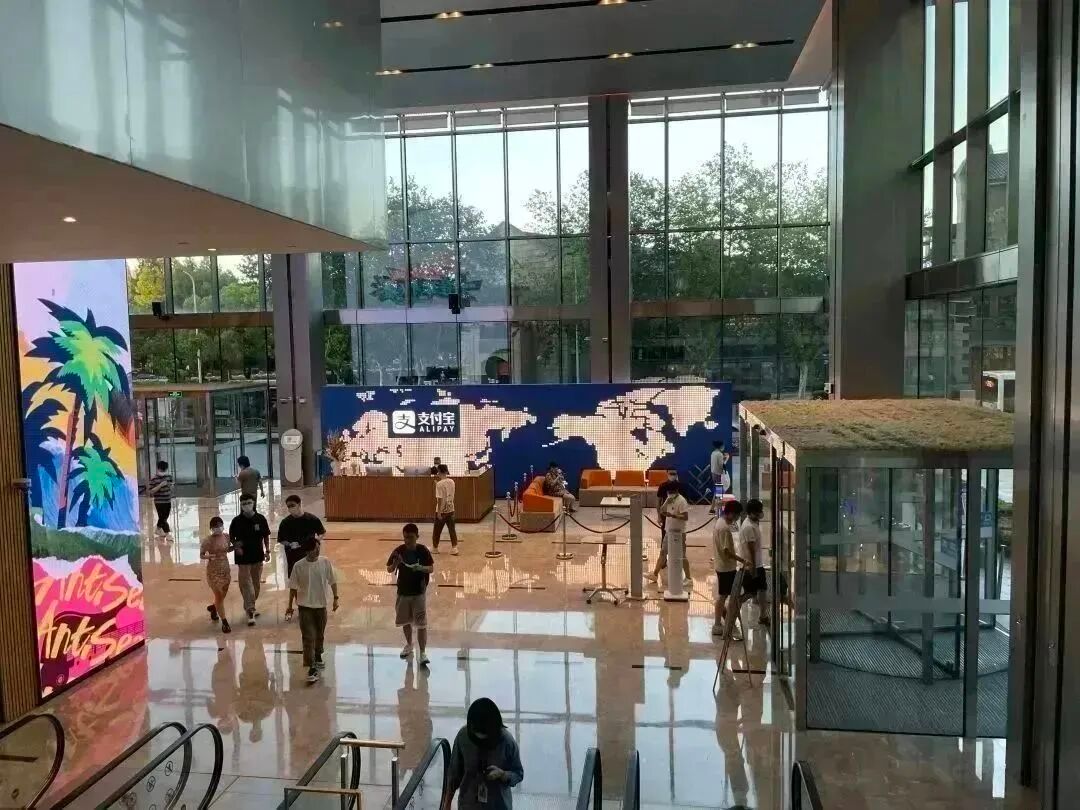
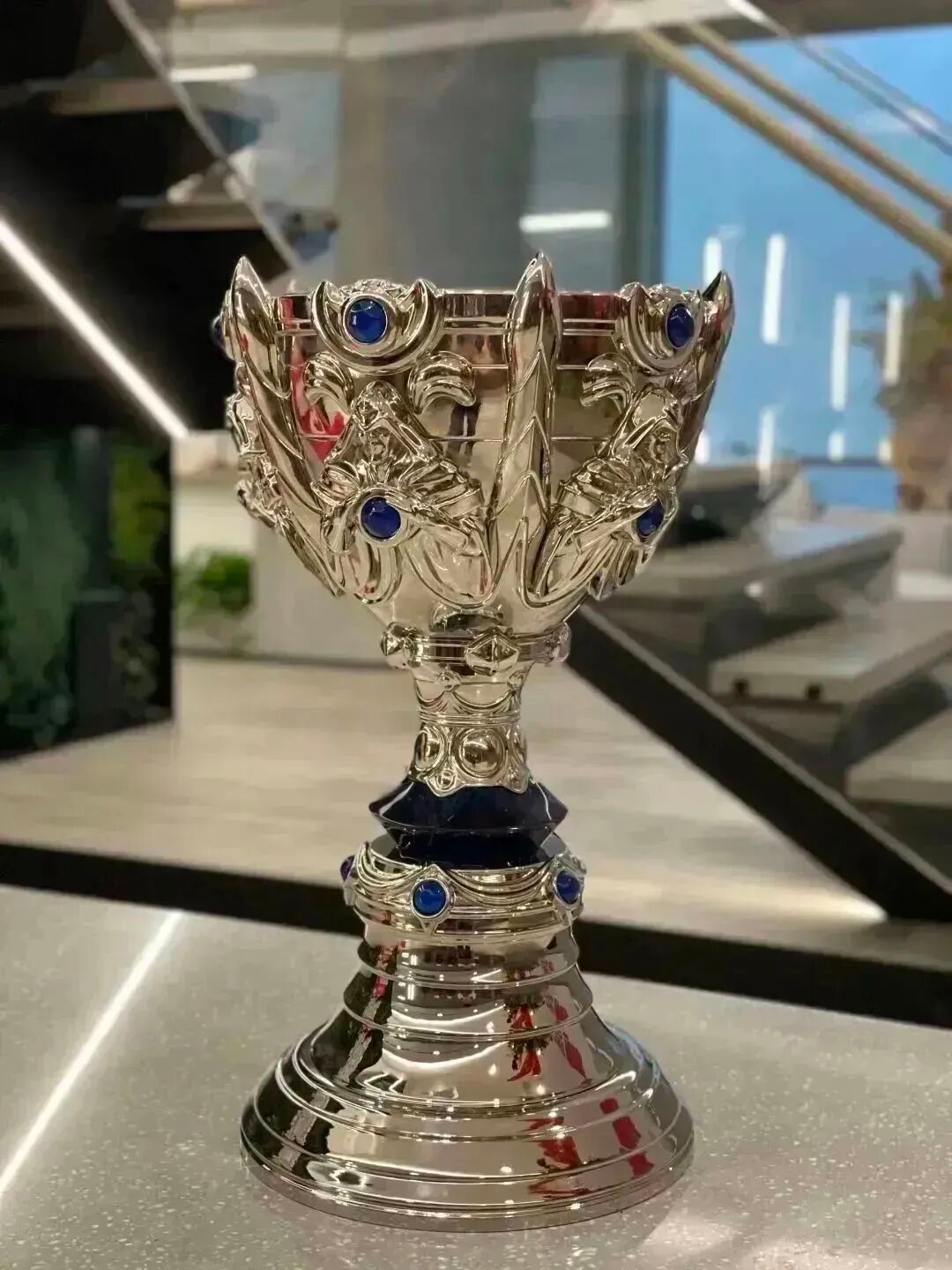
Now my days at Riot, too, are drawing toward their close. I think back to the sheer thrill of first seeing the old Summoner’s Cup, the knowing smile on first stepping into a meeting room named for a League of Legends champion, the first post-match review with colleagues after we were flattened in the group stage of the “Noob Cup” — and what moves through me is nothing but honest joy and contentment. I do not care whether games are heresy against the canon, or a trade that cannot promise tomorrow; I only know that I truly love this Eden that belongs to the ninth art, and that is enough.
So we are not, after all, empty cups waiting to be filled. We do not take on every piece of knowledge and every framework wholesale; rather, by the glimmer of what we perceive, we grope forward, run into wall after wall, hunt the faint traces of the soul, piece together a blurred outline of our own, cross fog after fog, and find, at last, the direction that was fated.
To close this section, I have one more insight — hardly a treasure, a brick tossed out in hopes of jade — for fellow business students at middling 985 universities outside the first-tier cities: convert the “locational advantage” of your school’s local standing into a “Title advantage” that travels nationwide on a résumé. Take investment banking and consulting: if a Summer at the “Three Zhongs and One Hua” is out of reach, start from a Haitong or Guotai Junan IPO project internship in your school’s own city; if MBB is out of reach, apply first to the Tier-2 and Tier-3 management-consulting projects running locally. Apply widely, interview widely — the chance will come.

Reflections on Cross-Applying to Business from a Minor-Language Major

For me, in truth, this is also a year-end application retrospective two years overdue. In March of sophomore year, newly admitted to the finance minor, I quietly told myself: wait until the move into business is real, then write. In March of junior year, doing odd little jobs at BCG, I let myself settle silently into the work at hand and the language tests ahead. Over this year’s Spring Festival, with offers arriving one after another, I was still waiting for the dust to finally settle — until the last birthday of my undergraduate years, when I felt the time had come: perhaps I was now equal to writing down my thoughts on these two years of the DIY cross-application road.
My cross-application differed from every past case in one fatal respect. Though my weighted finance GPA stood above 90 on the hundred-point scale, first in the program, and though my internship path and diversity were nearly top-spec, my Japanese-major GPA was a bare 77.81. Under the GPA-is-king application logic of the Covid years, the uncertainty that shadows the combination of “low major + high minor + strong soft background” hung over my subconscious like a warning bell in shadow, keeping me in constant unease, afraid that all the groundwork I had believed correct would prove a golden-millet dream.
So my list, by comparison, was radically aggressive and left no road back: over the whole season I submitted only to NUS, NTU, HKUST, IC, UCHI, YALE, UTOKYO — reach schools all, in the conventional sense. I could not accept a safety option. From the absolutely rational INTJ vantage, if a prospective safety school carried even one trace of dissatisfaction, I would sooner gap the year and fight again the next.
The luck is that I made it down this cross-application path no one had walked before — and here is the one spark these ramblings may offer juniors in the minor languages, or in the pure humanities: the choice to “abandon the irrelevant major entirely, and polish a top-grade business background with all your strength” can indeed win the favor of famous schools abroad. Even under a minor-language major GPA low past accepting, so long as you carry high minor grades that prove you can learn, high GRE/GMAT scores, and an excellent internship record, every attempt and effort you have made will lend force to the study-abroad application.
And herein lies the charm of admission by application. Set aside the small share of fairness problems it brings of itself: for me, against kaoyan, the domestic graduate entrance exam, the application system is an attack launched from a higher dimension. Kaoyan inherits in a straight line the gaokao’s character of high-efficiency selection over an enormous base, defining standardized talent by a few numbers steeped in chance; the application prefers to assess a student in the round, through intricate numbers, essays, and materials. Then too, kaoyan allows the choice of one major at one domestic school, while an application’s field of choice can stretch to an old and storied university at the other end of the continent.
My final choice is the beautiful Garden City. I look forward to July, to receiving with my own hands that student card printed with a gilt lion crest, and to extending five hard-laboring undergraduate years into a master’s with a higher ceiling. (Friends of the 23fall Singapore cohort, message me — let’s get a meal!)
One more thing deserves mention: the University of Tokyo’s MPP. For a bona fide, properly schooled Japanese major, Todai, its tuition kind to ordinary purses, was always the beautiful white moonlight of my heart. By the time the second-round interview came I was already whispering to family and friends that I might be off to Tokyo to live two years as an anime person at public expense. Who knew the admissions office would turn around and fling back a crisp rejection. Angered beyond anger, I declared a clean break with Japan on the spot, and to this day, the graduation thesis and my anime aside, I have not produced one sentence of Japanese.
Coda:
The road of a life can only narrow as it goes. The luck is that I used five undergraduate years to smash, with one fist, the sky-collapse opening hand that was civil engineering, and stretched the possibilities of this life with all the strength I had. It is like the traditional web novel built on linear leveling, or the miniature-garden JRPG: whenever the protagonist climbs a whole tier, the power system collapses, and the story forces a move across the great map. This journey toward the unknown puts me in mind of Lord of Mysteries: when Klein first put on the clown’s mask and boarded the steam train for Backlund, the land of hope, his heart too, perhaps, was strung with just this tension and expectancy.
The unknown is hard to fathom; the known, hard to leave. New bonds are hard to tie; old friends, hard to see again. (未知难解,已知难别。新知难结,旧知难见。)
In these five years of mine, from 18 to 23 — from computer science to hydraulic engineering, to Japanese, then to finance, then to games; from Xinglongshan, which gave me my first impression of university, to lush Hongjialou, and on to the other end of Asia — the journey has been long and jolting, but the full stop, so long extended, is at last about to be set down.
Ungetsu-san, happy birthday. (雲月さん、お誕生日おめでとうございます。)


First published on the WeChat official account “Juanmo Xuan” (2023-03-06): original post