No.004
Three Feet Square, Under Red Brick and Grey Tile (III)
Translated from the Chinese read the original
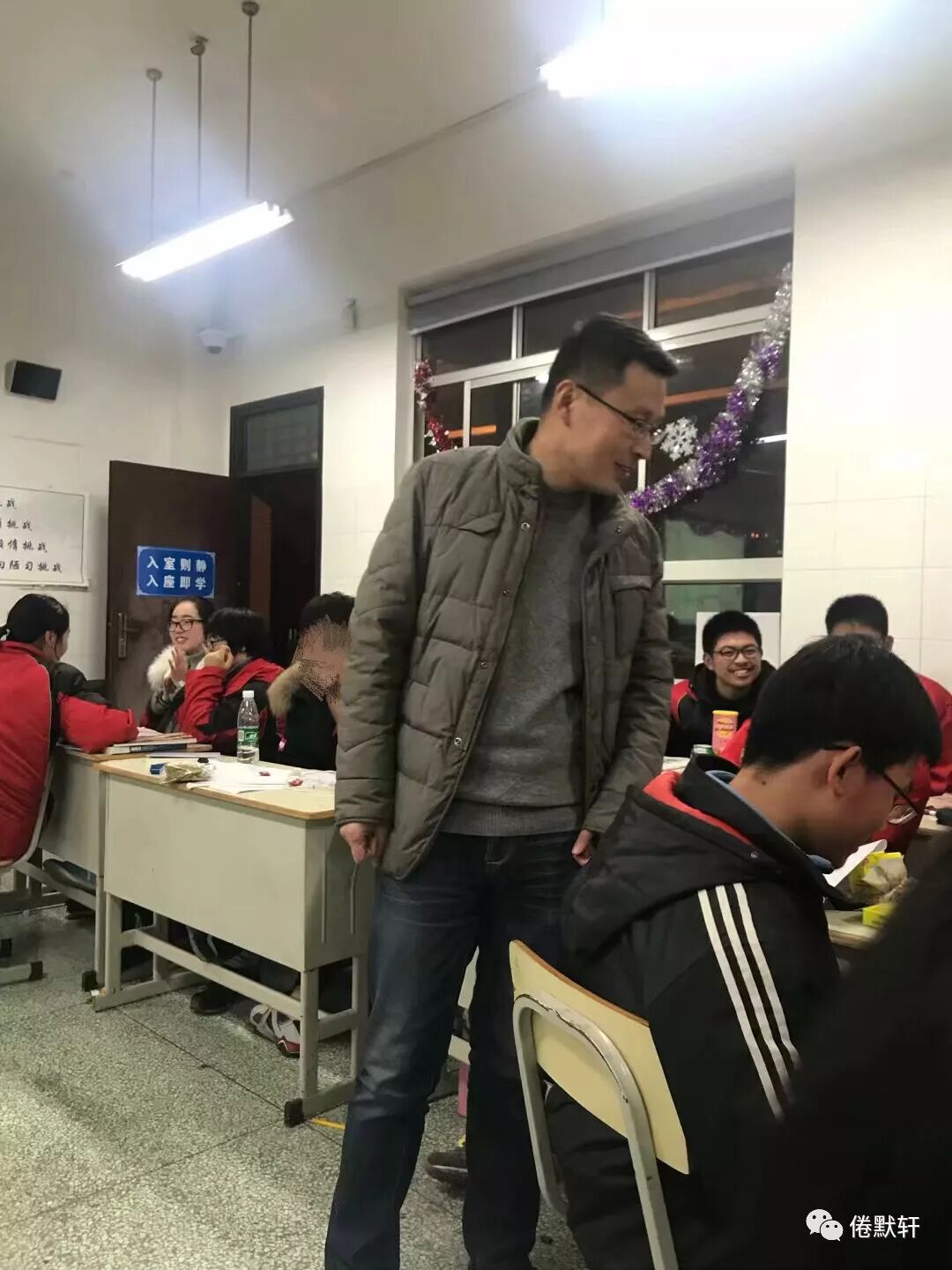
Since ours was Senior Three Class 27, its commanding figure was naturally the homeroom teacher, Brother Hui. He was “Brother” not only because his face was too young to support a “Lord,” but still more because there hung about him a certain air of the business magnate crossed with the underworld boss, so that we had no choice but to address him after the fashion of the brotherhood.
Leave aside for the moment that marvelous arrangement by which every science subject was taught by a woman: the rare pairing of a man teaching English while serving as homeroom teacher was enough in itself to rouse the whole class’s thirst for knowledge and its curiosity. Add that Brother Hui’s teaching kept to no stale rule or old method, but ran to frequent invention and to freewheeling nonsense, so that laughter never died among the assembled scholars, nor did their fellows’ pens ever rest. In English lessons, therefore, the entire class craned their necks, cast sidelong glances, smiled, sighed in silent admiration, and pronounced it exquisite. Within a few months our English had leapt to the fore, taking the school laurels in several major examinations.
Brother Hui was true to his name — 晖, a radiance of sunlight — and the blaze of his virtue set one gazing up as at a high mountain. Before class he would often stand erect at the lectern, still as a wooden carving, while his eyes, never pausing an instant, swept the room at a speed scarcely to be believed; even those classmates gifted in counter-surveillance felt their flesh creep, and went soft-footed and gingerly in everything they did. This one display of presence is enough by itself to paint the presence of the man — still as a deep pool, planted like a mountain.
Though there was much in Brother Hui’s teaching that was all his own, his catchphrases surpassed it by a degree, and only several days’ careful study would yield a glimpse of their least corner. He excelled above all at “it should be said” and “I say,” delivered a dozen and more times a day: “It should be said, this examination went passably well for the class”; “It should be said, tonight’s homework is really not much”; “I say, some of us are still not strict enough with ourselves”; “I say, this item of vocabulary is certain to be touched on this year”… The marrow of these catchphrases was grasped most deeply by our classmate Xia Yunjie. One evening when self-study let out, Xia, returning to his seat, found his deskmate Zhang Long in the full flow of a commotion; he hid himself behind him and abruptly, in pitch-perfect mimicry, let fall an “I say, have you no shame?” that cracked like a thunderbolt out of the empty air — at which Zhang Long lost his center of gravity and sat straight down on the floor. As luck would perversely have it, Brother Hui was at that very moment entering by the front door, hands clasped behind his back; hearing his trademark line counterfeited past all telling, his face clouded with puzzlement, and he looked toward Xia Yunjie. Happily Xia’s nerve was of the strongest: he took his seat without a word, as though nothing whatever had happened.
Beyond this, Brother Hui insisted that everything be done “with heart.” A month before the college entrance examination, moving down the crowd of students reciting in the corridor, he inquired of each in turn, with entire solemnity: “Today — did you put your heart into your reciting, your thinking?” Every face set firm; every answer was yes. At this he seemed relieved of a great weight, nodded in gratification, clasped his hands behind his back, and went his way. But the most celebrated passage on the theme of “heart” came during the review of a reading-comprehension piece, the gist of which was that a thief planned his route before every job and carried out each step to the letter, and so had never once failed. Brother Hui delivered himself thus: “So I say, whatever we do, we must do it with heart. Look at this thief — because he put his heart into it, he succeeded.” The whole class sat dumbstruck, and began to question whether the values eighteen years had shaped in us were sound after all.
Brother Hui had his own system, too, for the education of students. One day, having lugged the homework back, I returned to the classroom to find several requirements for the noon assignment on the blackboard, in a hand none too clear, and asked my deskmate Sun Pi (Sun Xin). Sun Pi assumed a look of high self-satisfaction and was on the point of explaining when a thunderclap burst from the back of the room: “I say, will you stop that prattle — for all the world like a fishwife. Look around you: is there anyone else so brazen?” Fire leapt up in me at once; I slapped the desk and shot to my feet: “I was asking about the assignment. That is not prattle.” Had I stayed in my seat no harm were done; but the instant I rose and turned, I ran full into Brother Hui’s gaze as it traveled from astonishment through incomprehension into wrath. He thundered: “Was it you I was speaking of?” My courage had already failed within, but I held firm that the aura, at least, must not be surrendered, and pleaded: “Even so, you cannot call me a fishwife…” His fury now at its height, Brother Hui pointed to the doorway: “Enough of your nonsense. Out you go, first.” A roar went through my skull; knowing matters had gone badly indeed, I arranged a look of injured innocence, walked out of the classroom, and stood at the door, head bowed in self-examination. Brother Hui paid me no notice, but made several circuits of the room with his hands behind his back, until I was in an agony of suspense, no longer knowing where to put my hands or on which leg to stand. After a long while he settled his glasses and came pacing slowly out through the back door.
His first words to me outside were: “It should be said, I have in my time expelled two students.” Every line of my psychological defense crumbled on the instant; the injured innocence was swept away and replaced by a face full of contrition, and I answered in an agony of remorse: “Sir, I was too rash just now. The fault was mine.” With that I stole a glance upward at his expression, supposing he would hardly let me off so easily — but Brother Hui’s face, like a paper tissue dissolving in water, softened in the space of a breath: “It should be said, your attitude at present is fairly good.” I hastened to follow the opening: “Sir, I promise it will not happen again.” At this he stood blank a moment, then waved a hand: “Off you go, then. Mind it next time.” So saying he turned, his head dipping slightly, his attention transferred in an instant, it seemed, to the stirring prospect below — all green trees and emerald vines. For all my gratitude some puzzlement remained; but there the matter was left.
In teaching English, Brother Hui was adept at squeezing out the last of our capacity for memorization. At the start of term, catching sight of a conspicuous word on a test paper, his eyebrows would knot at once into the two drooping strokes of the character 八, his back would hump up, and two fingers pressed together would jab heavenward three times running: “Good. This word is entrance-examination vocabulary, tested at very high frequency. Get it well by heart.” Occasionally some word would surface that the examination did not require, whereupon his head would crane forward: “This word is not examination vocabulary — but is it important, or is it not?” Naturally a few of the girls would nod and murmur assent, upon which he assumed at once an expression of settled certainty: “Then everyone is to get it just as well by heart.” Strangest of all was his manner in pronouncing “get it by heart”: the gaze grown overbearing, the lips spread to a square, and the hands thrown into the opening stance of the Nine Yin Divine Skill — martial beyond all description.
By the same token, under pressing of such intensity, Brother Hui naturally held our powers in the highest confidence. During dictation he looked neither left nor right, the entries leaping from his lips one after another. Afterward he would grieve in bitter anguish: “On this dictation the great majority of the class did very well — full marks. But a very few individuals wrote wretchedly, and may have gotten one or two wrong.” At first hearing I quaked: could a single error have sunk me to the bottom? Asking around after class, it turned out that not one soul had a perfect paper.
Brother Hui’s deep understanding of the teaching of English could be gathered into a single sentence: better to memorize sentences than words, and better to memorize contexts than sentences. Hence his habit of likening sentence and context to the home in which a word lives. He would fasten on some long and thorny sentence, let his gaze float a while, and bring it finally to rest on a figure in the third row rubbing his own head in perfect contentment: “Zhang Shuai. Translate this sentence for us.” Zhang Shuai froze, left off rubbing, rose trembling, hemmed out a few syllables, and ran dry. Brother Hui was much angered: “Sit down first. Hear how it ought to be said — He Lewei!” He Lewei, as it chanced, was rubbing his head too, the corner of his mouth still curved in mockery of Zhang Shuai; at the sound of his name he scrambled up and, with torrential fluency, fabricated a few lines out of whole cloth. He was just raising his eyes to gauge the effect when Brother Hui’s face filled with shock: “Is this sentence truly so hard? Is there anyone else who cannot manage it?” Not a soul spoke. Bitterness crossed Brother Hui’s face: “You see — in the whole class it is you two alone who cannot.” Here, of course, his judgment of men had erred: had he called on me, the sequel would have worn quite another look. And so we held fast to the doctrine of “context,” and in the end several dozen of the class actually scored above one hundred in English at the entrance examination.
Brother Hui taught that we must possess critical thinking: what must I pay to do this thing, is it of any use, is the efficiency high? Take, for instance, the “3+2” scheme of Jiangsu Province’s examination reform of 08 (Chinese, mathematics, and English counted toward a ranked total of three subjects; the two electives cut by percentile into grades A, B, C, and D): here Brother Hui often wore the look of a man grieved that iron will not become steel: “I have always said you must have critical thinking — yet I find you have not brought it to bear on your studies.” At this the class would look up in blank incomprehension and await the higher doctrine. Then came the classic argument: “I say, some of you — set down the baggage of the electives, and you will go the farther for it. In the three main subjects you stand within the top 10% of the province, even the top 1%; and here you are, run ragged for the sake of an elective B — the mark of the sixty percent. Is that not demeaning your own station?” After several rounds of such incitement, a band of braves did in fact, invoking the homeroom teacher’s name, openly cease to do their elective homework; the consequences, it need hardly be said, were bitter past telling. And yet, weighed carefully, the theory was not wholly without reason. As Brother Hui put it: “I say you score 390, with two Bs — now is there a problem there, or is there not? I hold there is none. Tongji University, I should think, ought to be enough for you!”
Speak of Brother Hui’s policy of “casting off the electives,” and Brother Hu (Hu Xiangxin) stands beyond dispute among its representative casualties. In one weekly test Brother Hu, on a careless flourish of the pen, took double As in physics and chemistry, while his three main subjects fell short of what might be wished. Whereupon Brother Hui, grave of countenance, addressed Hu Xiangxin with earnest, weighty warmth: “Hu Xiangxin. I say your physics and chemistry are good enough already. Even if you left off studying them, the very worst you could take at the examination is an A and a B.” Brother Hu was deeply moved, and for some weeks after, his pen fairly flew through the physics and chemistry homework, often finishing at a single breath, in a dozen-odd minutes, beneath the astonished gaze of the multitude. Of his accuracy nothing was known, but one look at his air of brimming self-assurance declared it could not be poor. Who was to know that at the major examination immediately following, Brother Hu would carry off double Cs at a stroke, and the whole class be set astir. At the class meeting that followed, Brother Hui denounced in fury the studious tone of our class: “I say double Cs in physics and chemistry would be no great matter — but some among us, must you actually go and score the double C?” From that day the class understood that Brother Hui’s words were now and then at odds with one another, and leaky at the seams, and not to be believed entire.
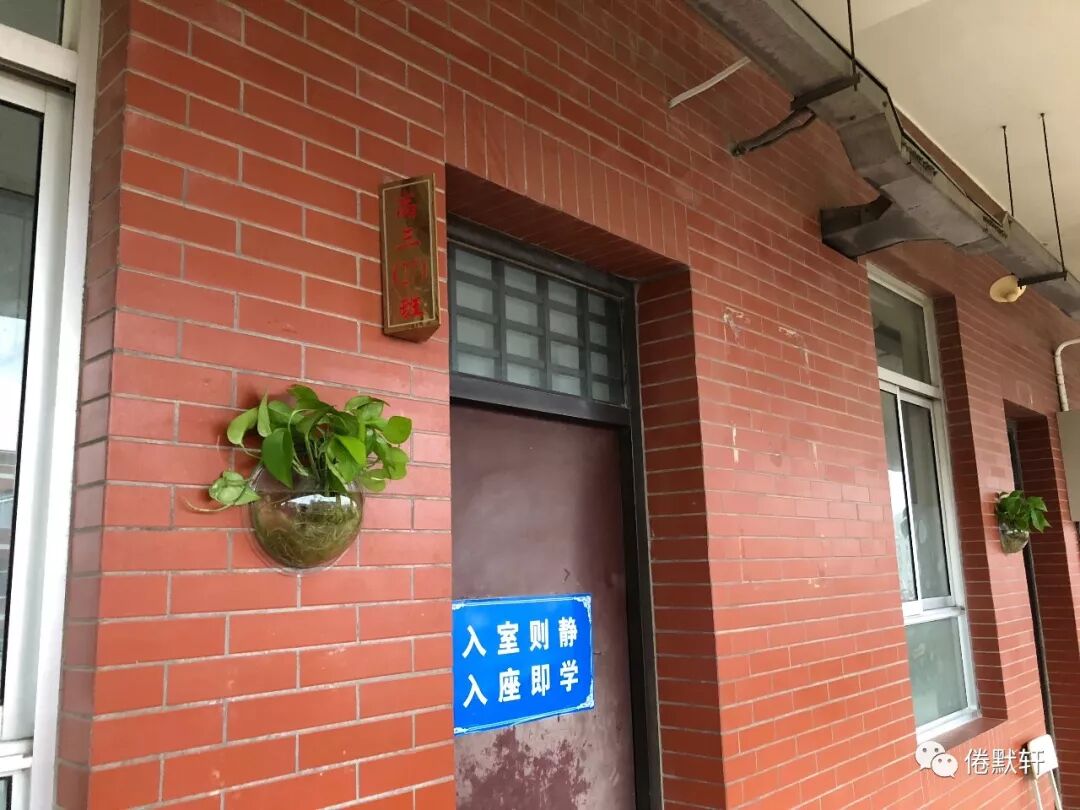
On certain summer nights, a mild, moist wind would sweep past the doorway, freighted with the smell of grass. Threading out ahead of the crowd, I would often see Brother Hui leaning at the railing with a slight stoop, his lenses catching a faint light. In those days it was my habit to take leave of my teacher a little perfunctorily, and then flee in high spirits from that broad field of Senior Three lamplight. Once, as it happened, I forgot the key to my bike; by the time I got back to the classroom it was already a quarter past ten, a few scattered figures were gathering up books and handouts, and Brother Hui stood gazing, somewhat lost in thought, at the class plaque that read “Senior Three (27).” Key in hand and hurrying downstairs, I caught it at the corner of my eye: Brother Hui settled his glasses, straightened his collar, his back rose once in a wave — and only then did he make ready to leave.
(To be continued)