No.011
*My Dear Liar*, Previewed — the Beneficiary Never Existed
Translated from the Chinese read the original

On November 8, My Dear Liar (受益人), directed by Shen Ao and starring Da Peng and Liu Yan, arrives in theaters. I was lucky enough to be among the very first audience in the country to see the finished film in person — and for a picture this closely watched, a precise preview is indispensable.
As Da Peng himself put it: “However you here today describe this film, that is what the talk around it will go on to make it.”
For those of us at the very first offline preview screening, that carries an added responsibility, almost of the raising-and-nurturing kind. After all, several outstanding homegrown films — Dying to Survive, The Wandering Earth, Ne Zha — have already stormed and reshuffled the capital landscape of Chinese cinema. Since 2017, every film made with real devotion has gradually won the respect and the championing of audiences who know how to look.

Fine films tend to tear an opening in reality and, in a voice fit to wake the deaf, deliver the humanist art that belongs to cinema alone. That kind of shock circles in the mind for a long while, so that even stepping out through the theater doors you are still savoring the intense unreality of it.
My Dear Liar is Shen Ao’s directorial debut, and this was also his first time meeting his audience face to face, sharing the small details of the film’s making. Before a packed house, Shen Ao looked poised and at ease, but his brows were written over with expectation; you could tell he carried a strong confidence that his first feature would be embraced.
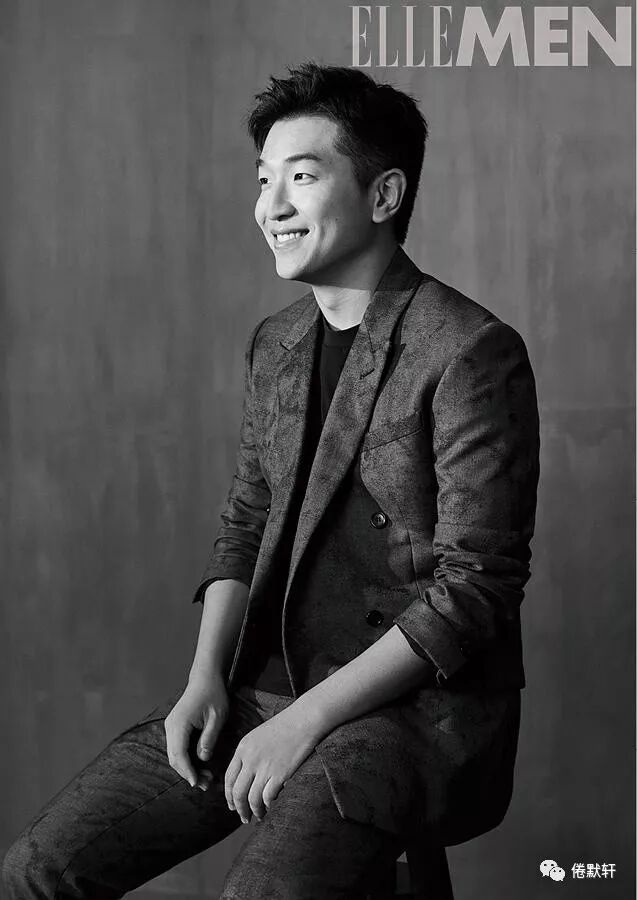
The first thing worth mentioning is the film’s excellent choice of subject. Producer Ning Hao, the “maverick” director who has broken out so forcefully in recent years, does not flinch from the crime material that ordinary production houses dare not touch. Of the several premises Shen Ao proposed, insurance fraud (骗保) was the most dangerous one to play — but often it is only by dancing on the tightrope at a subject’s outer limit, finding the one right point of entry and digging deep, that word of mouth truly explodes. Indeed, 2018’s Dying to Survive likewise chose to cut straight into the ills of the age and laid that social reality out before the audience in full. In the sheer impact of its subject, then, My Dear Liar stands among the front rank of homegrown films. Plainly, the “Bad Monkey” project Ning Hao has lately devoted himself to building carries real vision and ambition.
But a contradiction follows at once: in a film about crime, how do you keep a villainous male lead likable on screen? That becomes a serious problem. These past years we have seen too many homegrown films stumble at the casting of their protagonist — watching them, far from stepping into the anti-hero’s shoes, we find him dull of speech and repellent of face.
Shen Ao’s solution: if villains draw hatred, then cast a lovable pair of them. And so Da Peng and Liu Yan, a gold-standard duo on the rise, became the leading man and lady of My Dear Liar. And truly, faced with Da Peng’s grinning, wheedling mug, can you still bring yourself to hate him?

So how do Da Peng and Liu Yan actually perform in My Dear Liar? I imagine that is the question on everyone’s mind. This pair of screen “newcomers” has, after all, long labored under heavy labels — Da Peng can only ever play the clown; Liu Yan is nothing but a busty, brainless bit of eye candy; and so on.
In fact, as far back as 2016’s Jian Bing Man, Da Peng and Liu Yan had begun trying to break through the public’s fixed ideas of them. Da Peng’s superhero, “Jian Bing Man,” is a figure of tangled makeup who drifts between broad comedy and a sad clown’s pathos; and Liu Yan, her craft steadily firming, was little by little shedding the eye-candy label.
Yet from the very beginning, “de-labeling” (去标签化) is itself a kind of label. Just as Dumas fils obstinately set out to make a name apart from Dumas père’s overwhelming influence, or as several children of showbiz families on The Coming One Season 2 vowed to rise without their parents and cast off the labels stuck to them — it is precisely those short of real confidence who reach for the label of “de-labeling” to harvest eyes and attention.
And so, in My Dear Liar, Da Peng and Liu Yan have largely escaped the curse of “de-labeling”: more confident and more natural, they simply give their utmost to play their roles as close to perfectly as they can.
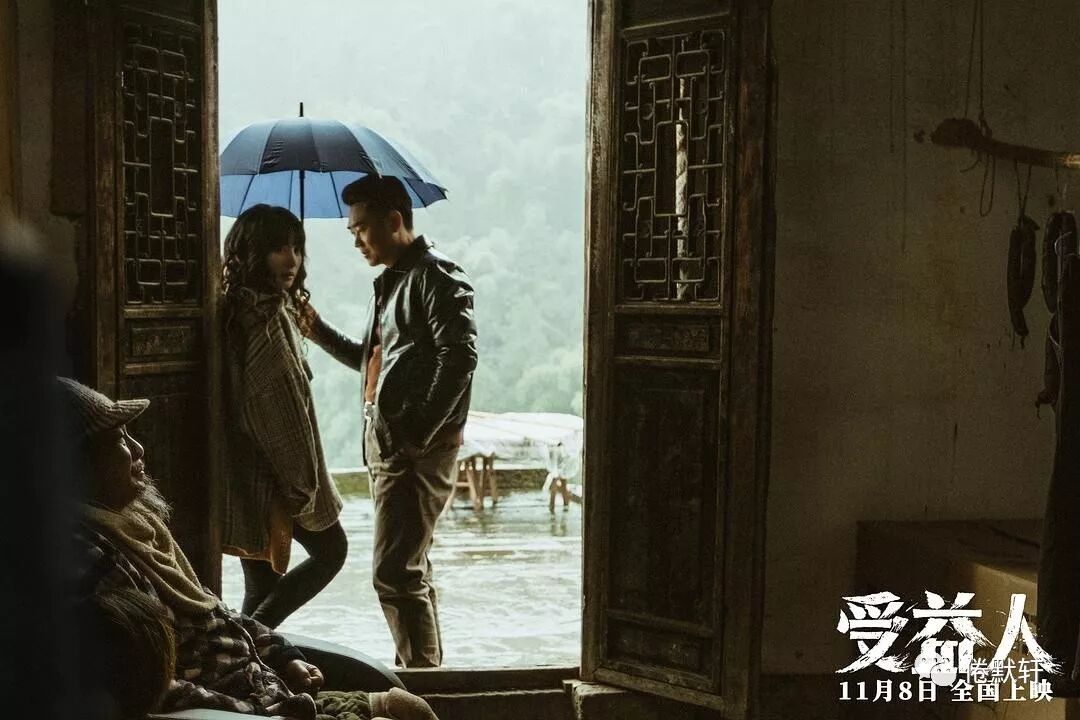
Two years ago, at the Jinan stop of the City of Rock roadshow, Da Peng said with a laugh that he had no interest in making Jian Bing Man 2 — he wanted to make Wolf Warrior 3. That marked a change in his stance as a filmmaker: having witnessed, from inside the industry, the phenomenon that was Wolf Warrior 2, Da Peng understood that today’s Chinese film market had reached its ripest moment for renewal. And out of that came My Dear Liar — shot in quiet concentration over two years, waiting to astonish in a single stroke.
For Da Peng and Liu Yan to grow into truly excellent actors of homegrown cinema, what they most need now is a metamorphosis on the order of Xu Zheng’s best-actor turn in Dying to Survive. Before production began, Da Peng could not speak a word of Chongqing dialect. To play Wu Hai, a Chongqing man born and bred, he drilled day and night, and in a matter of months spoke the dialect so cleanly that even a Chongqing native could find no fault in it. A fluent Chongqing tongue, several solid layers of tan, and the meekness of the small man at the bottom, sunk deep into the bones — with these, Da Peng hands in an answer sheet for Wu Hai that is satisfying enough.
Facing the eager crowd, Da Peng recalled a detail that had stuck with him. Once made up as his character — cringing and shrinking, hunched and limping, unimposing in height, giving off almost no presence at all — his visibility dropped abruptly to zero. At times the director, even the entire crew, could not find him, when in fact he was standing right behind the director. It is strikingly close to Heath Ledger, whose Joker in The Dark Knight became the stuff of legend: only by pouring one’s whole soul into a role can a character invented on the page be etched, alive, into the real world.

Now for Liu Yan. This actress, famous above all for her bombshell figure, has long come bound to Da Peng on screen. Ever since Diors Man went viral in 2014, the great majority of viewers have had their impression of her frozen at “a sexy bit of eye candy made famous by Da Peng.” To this day, if you look Liu Yan up on Wikipedia, nearly every line of introduction and honors still revolves around her pretty face and enviable figure. So if Liu Yan means to clear ground of her own in this profession, what she truly has to do is prove herself with solid, patient craft.
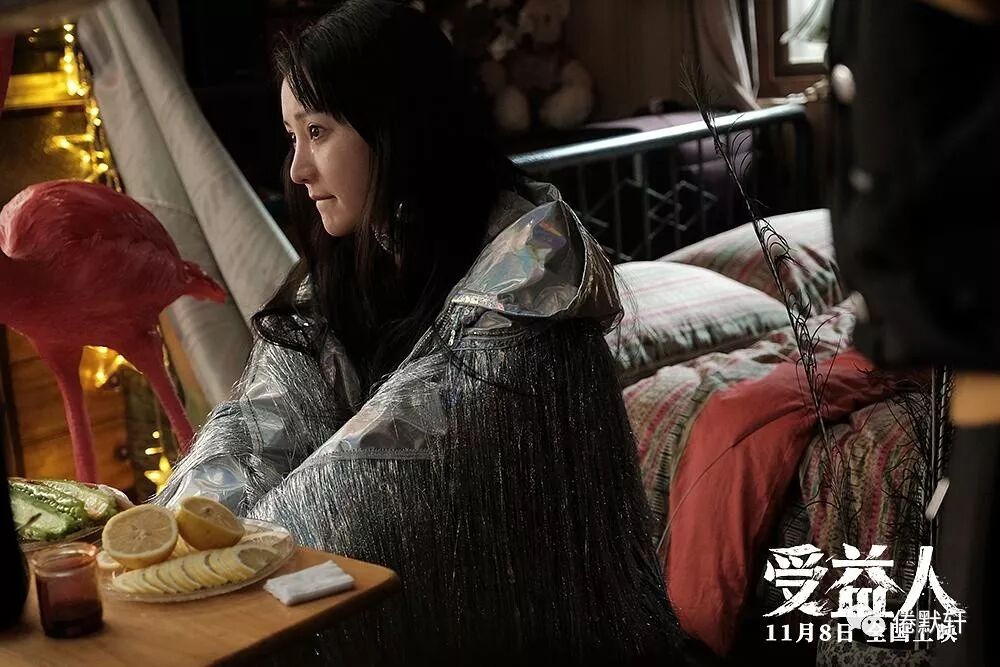
The film bears her out. As the streamer Yue Miaomiao, Liu Yan sustains a high level from start to finish, and in two scenes — wiping off her makeup on a live stream, and gazing out at the sea at the very end — her acting simply detonates. Shen Ao recalled that in the script, the makeup-removal scene had no set lines and no specific requirements. Liu Yan improvised in front of him for over a minute and very nearly talked him to tears; he hurried to call a stop — emotion that full had to be kept back, to bloom completely only once the camera rolled.
The reason, at bottom, is that in “wiping off the makeup” Liu Yan was not merely playing Yue Miaomiao; she was playing herself — removing, from the heart outward, the makeup of her own earlier career as a hostess on the internet-celebrity track, of all thirty-eight years of her life. That is what forged so classic a passage. A sexy streamer who made her money on risqué dance, Yue Miaomiao resolves, for her husband’s sake, to walk away from this not-quite-”respectable” trade for good. Through the whole of the scene, Liu Yan’s command of her face reaches its summit, rendering that farewell to the past — reluctant, yet resolved — down to the last drop.
And at the film’s close, when Yue Miaomiao looks through the telescope and sees a ragged Wu Hai at the water’s edge, her expression turns subtle and complex: the lips press together now and then, the curve at the corner of her eyes shifts by tiny degrees, and something like tears glints there even as she seems to be fighting the feeling down. That detonation of a performance put me in mind of the end of Project Gutenberg — Zhang Jingchu holding her elegant pose, tears glimmering amid the curling smoke. The two endings arrive at the same lift by different roads, and it is proof enough of how finely Shen Ao has polished the film’s framework.
Also worth mentioning are the film’s innovations in form and its planted surprises. Take the late scene in which Yue Miaomiao visits the prison and Wu Hai confesses everything: by rights a dry, boilerplate procedure, but with dashcam flashbacks folded in, it feels newly minted and echoes the dashcam vantage set up earlier — lending a traditional dialogue scene an added dimension of expressive tension. Da Peng mentioned that Shen Ao has buried a fair number of Easter eggs in the film, including but not limited to the fact that “Boss Jin,” the top patron on Little Fox Fairy’s leaderboard, is actually a primary-school student, and that the release date, November 8, happens to be Liu Yan’s 39th birthday. Readers who spot new ones are welcome to compare notes in the comments.
Next, the shortcomings of My Dear Liar. This is, after all, a comedy that keeps to the approved mainstream, and in both its actual feel and its ending it makes real concessions and compromises to the market. In the case that inspired the insurance scheme, the woman had none of Yue Miaomiao’s luck: she never escaped with her life, and ended as the sacrifice of the fraud. The affair that goes wrong at every turn, the comic business of the police chase in which Wu Hai runs rings around his pursuers, the idealized close in which Wu Hai reaches the sea and is seen by Yue Miaomiao — all of these wilt under a second look, somewhat superfluous and somewhat embarrassing.
On its theme of love, what My Dear Liar stresses is the arc “from harboring schemes against each other to holding on to each other for dear life” — a classic movement of the bickering-lovers comedy, and a stock device for keeping a film buoyant. But in this first feature of Shen Ao’s there is, unavoidably, a visible hand pushing the plot along, leaving more than a few marks of deliberate carpentry, and so its plausibility is sold at a discount. The clearest case is the figure of Yue Miaomiao herself, written so lovably that she blurs out of true: the cry of “Don’t run, you cad!” after her first meeting with Wu Hai; entering a chili-eating contest for the sake of an electric moped; conceding to Wu Hai again and again on the eve of the deed. The handling of such details is unripe — playing the sentiment card for the sake of playing it — and the film’s reflection on livestreaming as a rising trade likewise comes up one move short. This is the objective distance that still separates Shen Ao from the first rank of directors.
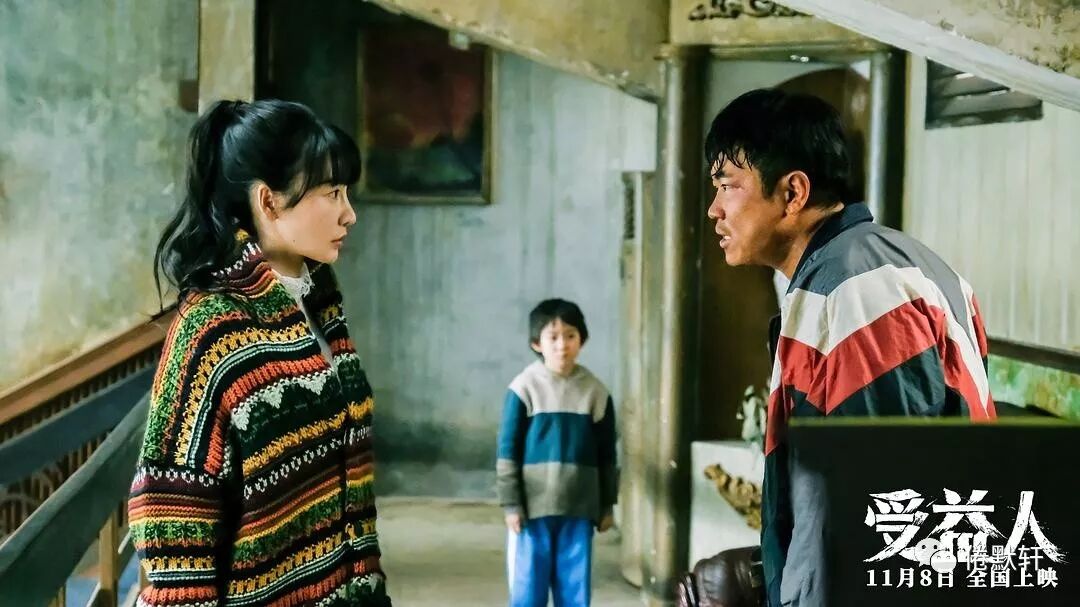
Finally, to the loftier questions. The moral orientation of My Dear Liar leans one-note. Set against Dying to Survive — patients, drug makers, and police locked in conflict with no easy right or wrong among them — My Dear Liar, with its characters painted in clean black and white like opera masks, can only be said to have just carried off a script of limited depth, without unearthing the deeper contest of human nature latent in so tangled a premise.
The Chinese title, 受益人 — “the beneficiary” — is taken from the final line of the story’s central prop, the insurance policy: the space where the beneficiary is named. It seems to invite the audience toward a harder reading of class: who, in the end, is the beneficiary of this farce? Wu Hai, a small man pressed flat at the bottom of society, opens the film teaching his son that “the most important thing in life is to be honest.” Yue Miaomiao, a streamer who sold skin for a living, “quits the low trade for an honest life” upon marrying and shoulders a wife’s duties without flaw. And Zhong Zhenjiang, the financial elite seated high above them, embezzles ten million and breaks the very laws he knows.
The entire film labors to set the two classes in stark opposition and to expose the ugliness of the upper one through farce and absurdity. Yet there is no denying that in the goodness of its little people, the film prettifies to the point of distortion: the crowd at the bottom could not last a single exchange against the class of the rich, and no flesh-selling streamer in the real world could ever possess Yue Miaomiao’s clarity of conscience. And so the question of who the beneficiary is has no answer at all — from beginning to end, the beneficiary never existed.