This is the first piece in my summing-up of changing majors.
Before the main text:
May and December are the two junctures at which most universities let students change majors. At Shandong University, the former is the lateral transfer, the harder to win; the latter is the down-a-year transfer, the costlier in sacrifice.
We all crane our necks for them, all quietly hoping to rewrite our lives. For the water that flooded our heads when we picked the wrong major became, long ago, the tears we shed studying a major we had learned to despise.
May your subjective initiative forge the blade that slits open the great hypnotic atmosphere; may you make, after long deliberation, the decision that redefines your future, then charge, never once looking back, at the field you truly love. For on the road ahead, turning points as simple as this are truly few.
Even though letting go of enormous sunk costs takes a courage more enormous still; even though life so often runs as an irrational Markov process; even though a life is indeed deeply path-dependent.
Seize the chance; make the perilous leap. The scroll of the future has only ever been unrolled by your own hand.
At dusk on December 2 of last year, a boy in a blue plaid shirt, his hair a mess, shouldered one strap of his backpack and walked out of Building 7 at Hongjialou in a daze. At the sky’s edge burned cluster upon cluster of evening glow, rolling south fold upon fold like a purple galaxy fallen to pieces, dyeing his round lenses into two pansies in full bloom.
I did not yet know the result then, but the smile of the Japanese department professor at the interview’s close was still an immense comfort. Before the vermilion-lacquered wooden door of Building 7 ran a little path screened by trees; I picked my way unevenly over the flagstones, feeling somehow more lost and hollow than in the days of painstaking preparation just past — none of the ease of a great matter settled, none of the round-the-clock abandon either. The stone that had pressed on my heart for a year and a half was at last crumbling slowly into powder. From the classroom building not far off drifted the sound of reading aloud; I breathed in the quiet, fine incense of the humanities, felt that pleasure flowing like living water, and suddenly the burden of being an engineering student went slack: the humanistic world before my eyes was no longer quite the same as the engineering outskirts ten kilometers away.
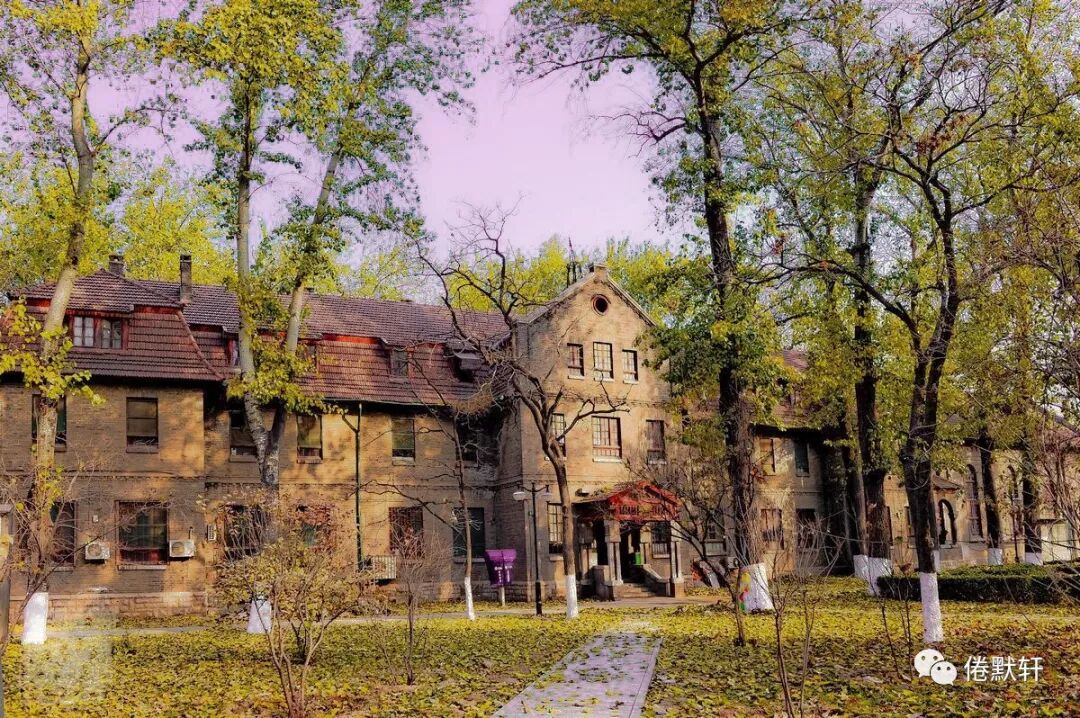
These last couple of days, watching everyone throw themselves headlong into preparing for exam week, my WeChat Moments ringing with howls like stuck pigs, I lay in perfect comfort on the big soft 1.8-meter bed at home, hundreds of kilometers away, and could not help feeling a certain loss and regret: this grand university occasion, held once each half year, at last had nothing to do with me for once. The air inside and outside the room was filled with cheerful excitement.
Once my registration passed to the School of Foreign Languages, the whole suite of high-end engineering courses — Mechanics of Materials, Engineering Surveying, Structural Mechanics, and the rest — turned wholesale into elective credits. So even a student as devoted to learning as I would have no further fate of conspiring at life with these classic engineering courses. Translated: the Four Great Classics of Flunking? Bye-bye now. They are all electives — surely no one really thinks these electives still have to be passed.
And so in mid-December, a cohort of down-a-year transfers regrettably lost the pressure of final exams and began the happiest winter break of their lives. The esports players set out on their climb through the ranks of the new S10 season; the young couples clung together all day, sweet past the point of cloying; and those whose hearts flew homeward like arrows booked their tickets early — I among them. After passing through changing majors, that great upheaval in the direction of a life, nothing opens the heart like the smiling faces of family.
Changing majors is not so great a thing, as things go — set against the course of history, one person’s trajectory will in all likelihood decide nothing; but neither is it small, for it was one traditional engineering student’s perilous leap into the humanities.
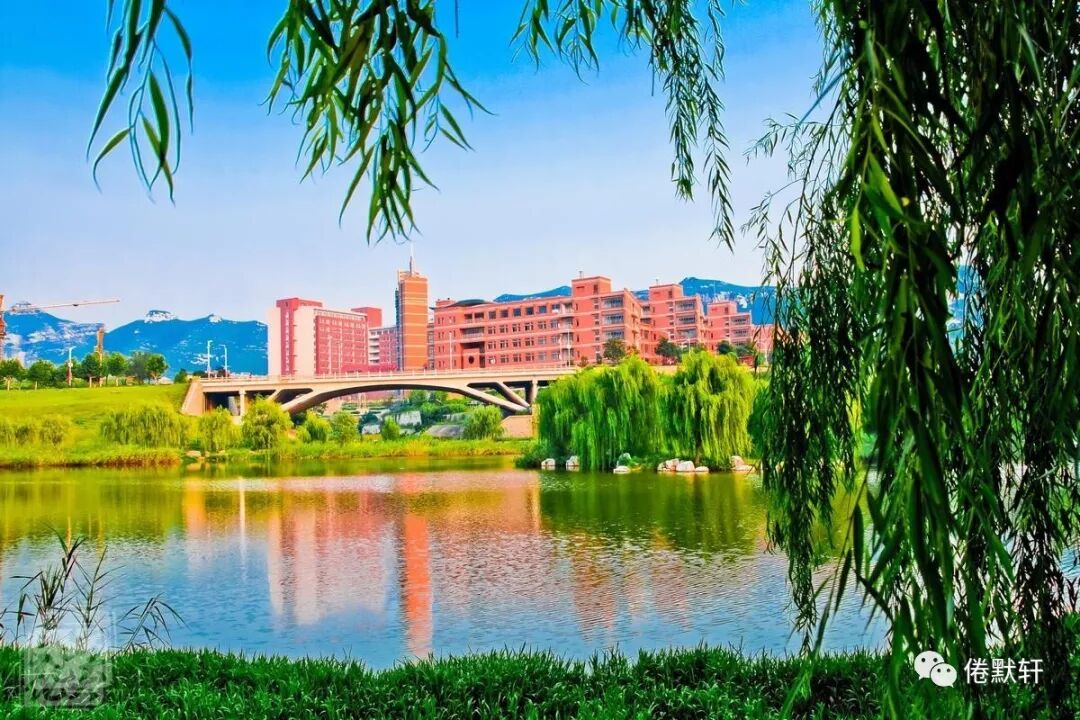
Plainly, hydraulic engineering was where the admissions system had reassigned me — even the school of civil engineering was not my own choosing. I no longer remember which night after enrollment it was: I tossed and turned, unable to sleep, got up and looked at Jinan’s autumn moon, a man’s shouting drifting faintly from somewhere near this engineering campus. Moonlight, wrapped in cold wind, lit the copy of Civil Engineering Drawing lying open on my desk, and something half dream, half waking, shot through with a vast unreality, struck me: no one loves a major the “quit your major” discourse warns you away from, nor a far-flung engineering campus. From that moment on, I began to plot this escape of my youth.
In truth, whoever is changing majors hugs a secret delight — above all when a teacher of your old major scolds you for not studying its material in earnest, and you can bow your head and murmur assent while playing the pig that eats the tiger, setting about the escape soon to come. At the transfer interview, the professors’ first question is bound to be: why do you want to change majors? Every senior who has gone before will tell you: never say you hate your old major, never let the professors scent your loathing — at the very least, keep it off the table. So of course I said not a word of my feelings about hydraulic engineering. But now that this one-and-only-once change of majors has drawn to a close, it is only natural to speak without a filter and say it all.
A few days ago, wheeling my suitcase out of Building 14 at Xinglongshan, I looked back at the dormitory’s red walls and the thick green around it, gold dapple through the branches falling across my fingers. I gazed at this scene, familiar to the point of strangeness, shook my head, and heaved the suitcase into the taxi’s trunk. The engine started; my eyes fixed on the mirror — the bathhouse-supermarket drawing farther away, Tiangong Lake and Lovers’ Slope shrinking, Xianzhi Avenue blurring — and only then did it strike me, all at once, that I had never hated Xinglongshan so very much after all.
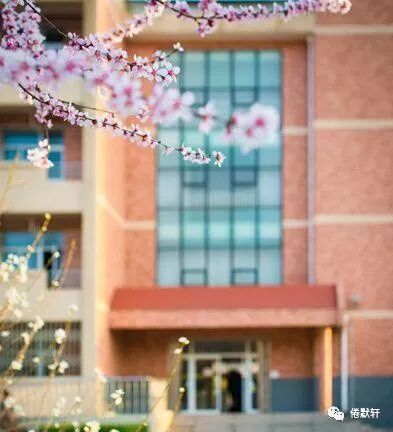
In 骊歌 GALA sings: “Life is one long missing; may you not squander it.” As a child, what did I understand of that — I remember only summers so long they seemed to carry no full stop, and an extra-large sundae that truly could never be finished. But summer was only ever three months, and a large sundae never more than the extra thrown in with a holiday combo. So it turns out: life is one long squandering; may you not miss it.
And so life keeps switching to new world maps. Which city’s university to choose, which major to change into, when to file the visa and go study abroad, the first words traded with a future partner… each of these ordinary moments is, in truth, the teleport gate by which the map changes.
At bottom, life is regression to the mean. The you at the end is bound to be the real you, the composite of desire and ability. Do not be bound by enormous sunk costs; may we all have the resolve to start over and the tenacity of a lone, headlong courage.
I used to like describing myself in a single slash-studded line: INTJ / くも / literary youth / front-end / esports product / photography / hydraulic engineering. Now the slash youth has finally shed the hat of hydraulic engineering, and the days of hydropower stations and concrete dams have at last passed into memory.
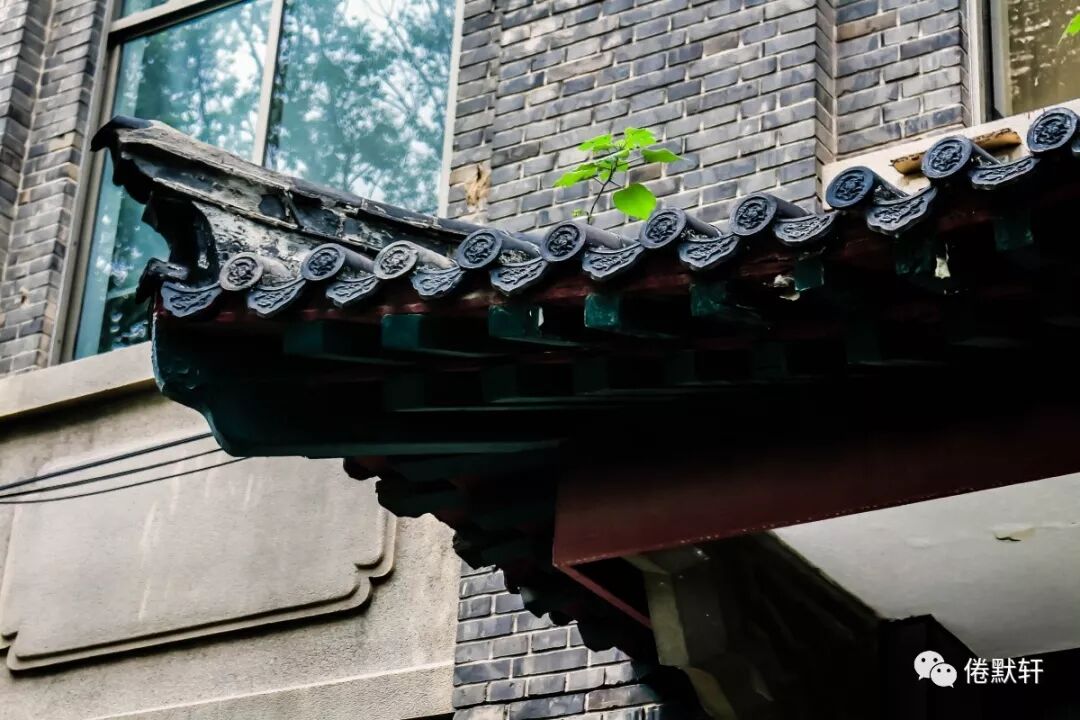
So, let me introduce myself anew.
Shandong University, School of Foreign Languages and Literature, Japanese major, Class of 2019: 厉云越.