No.017
At Twenty-Six — In a Frostless South, Beholding the Splendor of Things
Translated from the Chinese read the original
Preface
“Life is not what one lived, but what one remembers, and how one remembers it in order to recount it.”
“La vida no es la que uno vivió, sino la que uno recuerda y cómo la recuerda para contarla.”
—— Gabriel García Márquez, Living to Tell the Tale
These are the words Márquez left on the flyleaf of his autobiography. By coincidence, I share a birthday — March the sixth — with the greatest writer the Spanish language has produced. Each birthday’s age is, for me, a knot tied in the cord of time, one more telling made against the void.
In recent years I have often felt time bolt past. A year’s scenery flashes by, and looking back it is as if nothing happened at all; what has passed through us seems a few pale goose-prints in the snow-slush, easily erased and written over. At the root of it, perhaps, our experience of life has stopped mattering — and whatever is not deep enough does not deserve to be remembered by time.
The border between the virtual and the real blurs by the day; the wall between workday and rest is barely detectable; the toggling between online and off grows only more frequent; and our inner experience gradually loses its necessary partitions, settling at last into a dulled numbness — the sense of being alive is stripped down to the single question of whether one is at peace with oneself, and even a swell of feeling becomes an accident to be managed.
Guangdong has no Frost’s Descent, no cold that freezes through to the bone; even the seasons have lost their clean gradations, and the days run like a videotape on loop, without beginning or end. And I — a stranger drifted here from who knows where — have come to grasp, with increasing clarity, the ground-color of Albert Camus’s philosophy: only by recognizing life’s absurdity can one find happiness inside the tragedy; only by facing life’s fragility and despair can one live to the very hilt. This is humanity’s final act of revolt.
Twenty-six, with twenty-five barely past. At an age no longer entitled to call itself young, its wings not yet fully fledged, I sit in the mild night wind of an early southern spring, and stoop to gather the drifting light of this one year.

I. Old Dreams of Hengfu • All Spring, a Dream-Rain Drifts upon the Tiles

Eileen Chang wrote, in “Notes on Apartment Life”: “The apartment is the most ideal place for fleeing the world… In the countryside, buying half a catty more of cured pork sets off endless gossip; but on the top floor of an apartment block, you may stand at the window and change your clothes and no one will mind!”
In the twenties and thirties of the twentieth century, as people poured into Shanghai, apartment houses in the eclectic style rose across the old International Settlement and the French Concession, let mostly to well-paid, westernized tenants. For Eileen Chang, the charm of apartment living lay not only in its being rather a fashionable way to live; the apartment lacked the clamor of the shikumen lanes, and spared her interruptions at her writing. There was hot water, gas, modern sanitary ware — nothing the lane houses could match. Perhaps it was Wang Anyi’s The Song of Everlasting Sorrow, read on the sly in my student years, that infected me with the petit-bourgeois weakness: I love the apartments and villas of Hengfu beyond all reason.
“Fleeing the world” is exquisitely put — there is a secret pleasure shining through it. It is not merely retreat; it is more like chewing life over slowly in a small world of one’s own, unstartled by the neighbors’ traffic in everyone else’s affairs.
The old apartments of Hengfu are not so sealed off as the freestanding villas (especially the suburban ones), nor so tumultuous as a courtyard house. When you want quiet, draw the curtains and there is a world of your own; when you want a breath of the street, stand on the balcony and look down into the ways of the world; and when you want to walk down and steep yourself in it, that is easy too — a few steps and you are there.
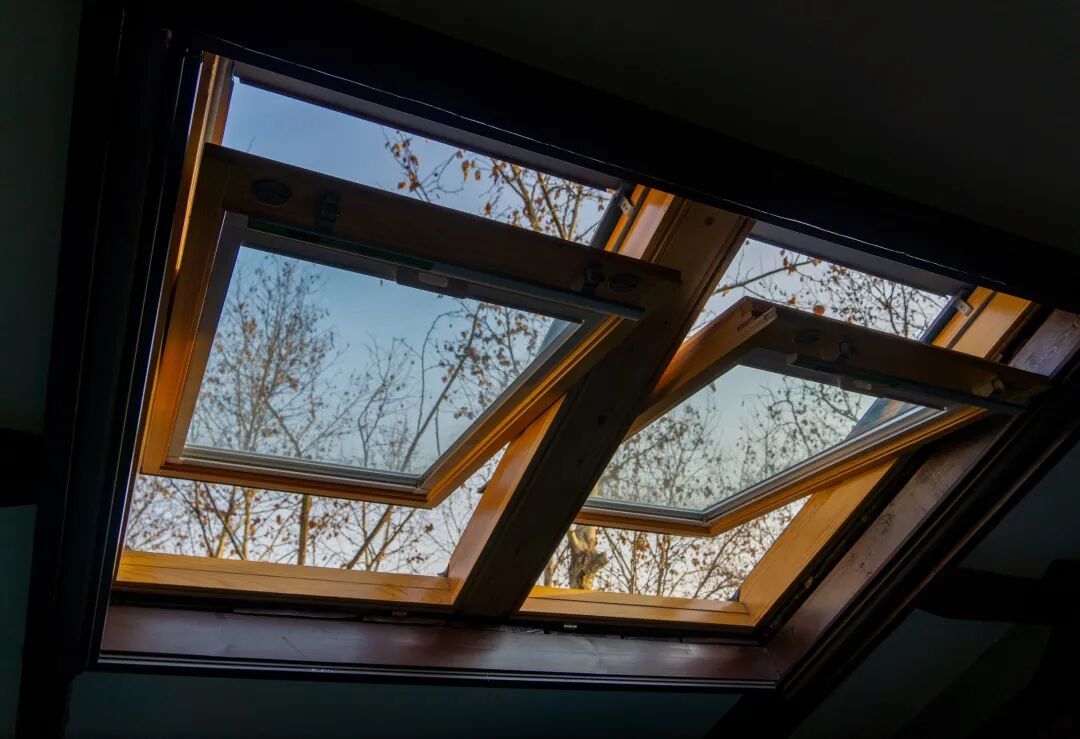
From my second year of university I lived in Hengfu, off and on, for nearly two years, moving through Sinan Road, Nanchang Road, Julu Road, and South Shaanxi Road. It is a place fit for dreaming; every street of Hengfu hides old dreams past counting. Roses clamber over the mottled brick wall-tops of Sinan Road, and in early spring the magnolia petals drift onto passers-by’s hair. On the skylights of the steep-roofed villas of Nanchang Road lie a few whole fallen leaves, their veins distinct against the pale pink light after rain. The plane trees of Huaihai Middle Road run on for miles; in summer their canopy shuts out the sky, and one walks as if through a painting, the delta’s venomous sun turned gentle and companionable under the shade. At the corner of the Wukang Building there is always someone raising a camera; yet however the crowd surges, turn into Tai’an Road beside it and you drop, in an instant, into quiet.
At blue hour, behind half-closed shutters and old black steel casements, you could often make out a piano playing in the villas — a stop-start romance, like an unfinished love letter from Xu Zhimo to Lu Xiaoman. Man or woman, old or young, anyone walking the plane-tree district begins to suspect they are a well-dressed Shanghai passer-by in a Wong Kar-wai film, liable at any moment to brush past a slender figure in a qipao.
Two years ago, back from my master’s, I had just moved into South Shaanxi Road; for a month and more I measured and re-measured, drew plans, hauled furniture in and out, added lamps and mid-century oddments piece by piece to remake a rented room. In that room inscribed, at just the right season, with dream-fulfillment and happiness, a maximalist’s joy grew fuller by the day.
At No. 235 on the east side of the road, ten walking meters from home, stands the small and lovely Mingfu Library (formerly the Luwan District Library), where the afternoons run longer than elsewhere. The carved lintels of the Science Society of China’s western-style building cast a fine-woven shade; sunlight crossing the porch is sieved by the cast-iron patterns into geometry; the wall paint has faded, over nearly a century, to a soft rice-white, like the inner pages of a dictionary thumbed beyond counting.
The leaves outside yellowed day by day. On many late-autumn mornings I rose early to sit in Mingfu’s reading room, open on three sides, the pages on the desk bright as if dusted with thin frost, watching the lines of text flow slowly through my mind; the creases and marginalia on old pages were like readers from different times keeping secret rendezvous there. Now and then I looked up at the two-toned plane trees pushing the days noiselessly forward, and in those hours I believed this unmoored boat of mine would stay anchored a long while in that historied green.
One summer night late last June, fresh from a hard-won winners’-bracket match of League of Legends ARAM with my old teammates, at one or two in the morning I skipped the taxi and paced slowly home along West Jianguo and Yongjia Road. The petal-shaped cast-iron street lamps drew the broad plane-leaves’ shadows out long across my shoulders, a gentle cloak. The old villas along the way steeped in warm yellow, potted green crowding their windowsills; now and then a big orange cat swept nimbly along a brick wall, soundless, leaving only the light rasp of leaves.
In that half-trance, my earphones happened to turn to the soundtrack of Lust, Caution, and Desplat’s theme for Wong Chia Chi1 welled faintly open in the empty night. A three-step waltz of interlaced cello and piano, dragging behind it an old era’s suppressed undercurrents and its gorgeous desolation. I slowed without meaning to, as if I had climbed into that swaying rickshaw and heard a low voice drop beside my ear: “To Route Ferguson.” The Ferguson of those days, the Wukang Road of ours. In the light and shadow of Ang Lee’s lens, Wong Chia Chi clutched the promise of an apartment of her own, and to her death never truly crossed that door. The dangerous refuge that should briefly have housed her terror, her desire and her despair was, in the end, a poisoned-cup dream of a world in chaos.
That, too, is the hidden wound Eileen Chang cast into the story — Mr. Yi plainly overlaid with the shadow of Hu Lancheng. The same collaborator-official, the same thin-hearted faithlessness: with one riddled, illusory love he pushed the writer and the written into the same irretrievable abyss. Walking now the old Concession roads they shared, the cool night wind mincing the tree-shadows, I seemed to undergo a secret parting of the soul: the husk still walking a twenty-first-century asphalt road alone, while the perceiving self flowed upstream, to share — in the same gaps between the same plane trees — that sumptuous, desolate intoxication with the ghosts of the forties, strangled twice over by their era and their love.
It is exactly these memories, adrift between real and unreal, that make everything in Shanghai feel so exact — like the faint noise-floor of an old vinyl record that makes the music the more human for it. However loud Caohejing roared, I had only to walk into that screen of plane trees for my heartbeat to fall into phase with a hundred years of stillness. Every brick and tile here, every blade and leaf, carries a settled tenderness that can catch all weariness and unease, and make room for every untimely affectation and romance.
On my last night before leaving Shanghai, I looped Mao Buyi’s 《二零三》2, for the old villa room on South Shaanxi Road that had kept me through my best year:
Many years from now, where will I make my home —
will I still get to hold a warmth like this?
The truth is, I know: to you
I am no more than a traveler passing through.
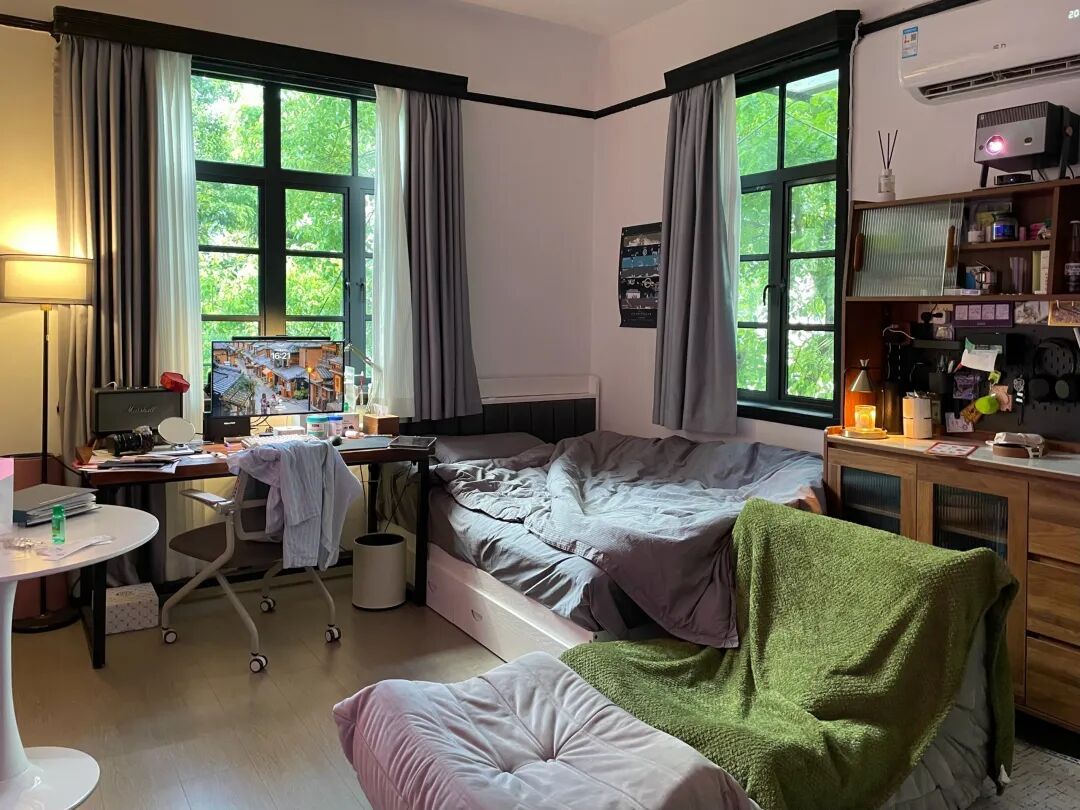

II. A Frostless New Corner • Homeward Alone Past Beaded Curtains and Drifting Lamps

At this moment a boundless rain is falling outside the window — only the world beyond this window has become the South, no longer the old dream of Hengfu.
The rain-threads of the South are viscous, like a grease that will not wash off, pasting themselves layer on layer over the glass curtain walls, and over that restless seam in a person’s chest. It has none of the north-China summer rain’s bluffness, which slaps the ground into half-foot crowns of spray and slaps the heart open and bright; none of the Yangtze-Huai plum rain’s clinging, every thread hiding the soft speech and warm scents of the lanes. It is stifling, it is thick; when it rolls in on the South China Sea’s undissolvable damp, it is a basin of lukewarm water upended over your head — no relief from the heat, only every pore stopped and struggling, as if a hand were over your mouth and nose, till breathing itself drags.
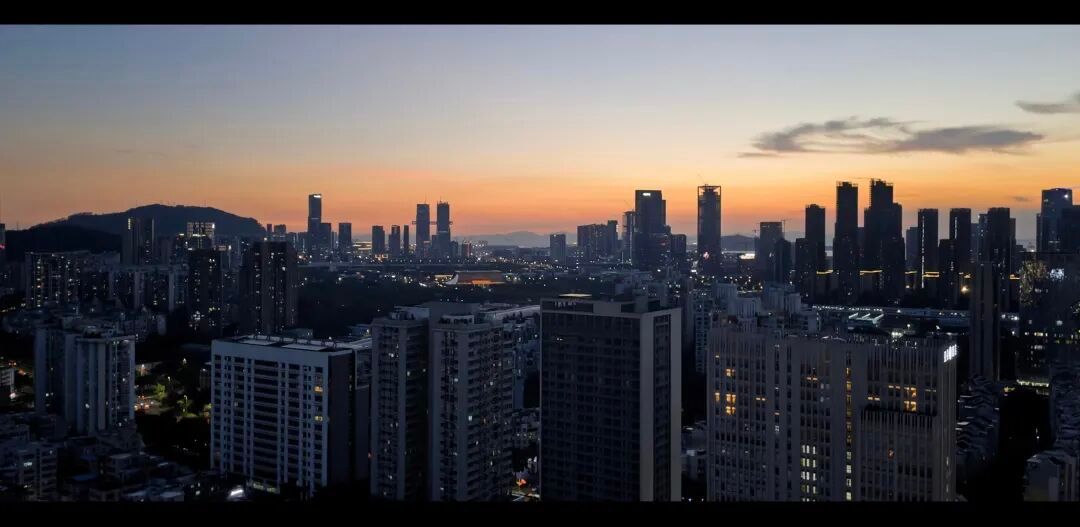
Through this film of rain-fog, the lights of trillion-GDP Nanshan blur open like rouge bleeding into xuan paper. One morning before the new year I started awake from a nightmare, looked across at André Gide on the poets’ calendar opposite the bed, and realized with a jolt it was already February of 2026. It should have been the season of lingering chill; what surged in when I pushed the window open was a heat wave freighted with the smell of green things. This falseness of climate breeds, in a native of the Yellow Sea coast, an enormous Singapore-like absurdity: as if I were living not in a real geographic dimension but thrown into a giant petri dish called the Greater Bay Area. This city is an enclave the seasons forgot; time here is smudged. You can walk out in shirtsleeves in the twelfth month; there is no snowed-in stillness, no clarity of cold blown through to the bone. The days lose their creases, spread out flat and smooth — and empty, with not one solid mark to hold onto.
In Singapore I was fond of the phrase “Endless Summer” — originally an American-bred hydrangea whose flowering runs unbroken from late spring into autumn, Latin name Hydrangea macrophylla, adopted by many a literary hand as the romantic name for the southern climate. To me this has a whiff of dressing a funeral as a feast. Its counter-concept is the Japanese shiki-oriori — 四季折々 — the romance of four seasons distinct and turning.
Perpetual summer ought to mean dozing under coconut palms, love without a thought for tomorrow, more watermelon and ice cream than one can finish, beach walks at sundown. But Shenzhen and Singapore are both East Asian miracles run on pragmatism and meritocracy: systems of extreme efficiency that secure survival and advancement while diluting the languor and romance the climate came with. Geography plus climate plus policy have raised this place into a greenhouse in the literal sense — a greenhouse with no hard geopolitics of daily life and no weighty inheritance of culture, like a retreat for inner contemplation that grants the minimum of outside stimulus and the maximum of safety, the better to concentrate on self-examination and revenue. This is, after all, a city where even “lying flat” must be painted over till only “flat” remains.
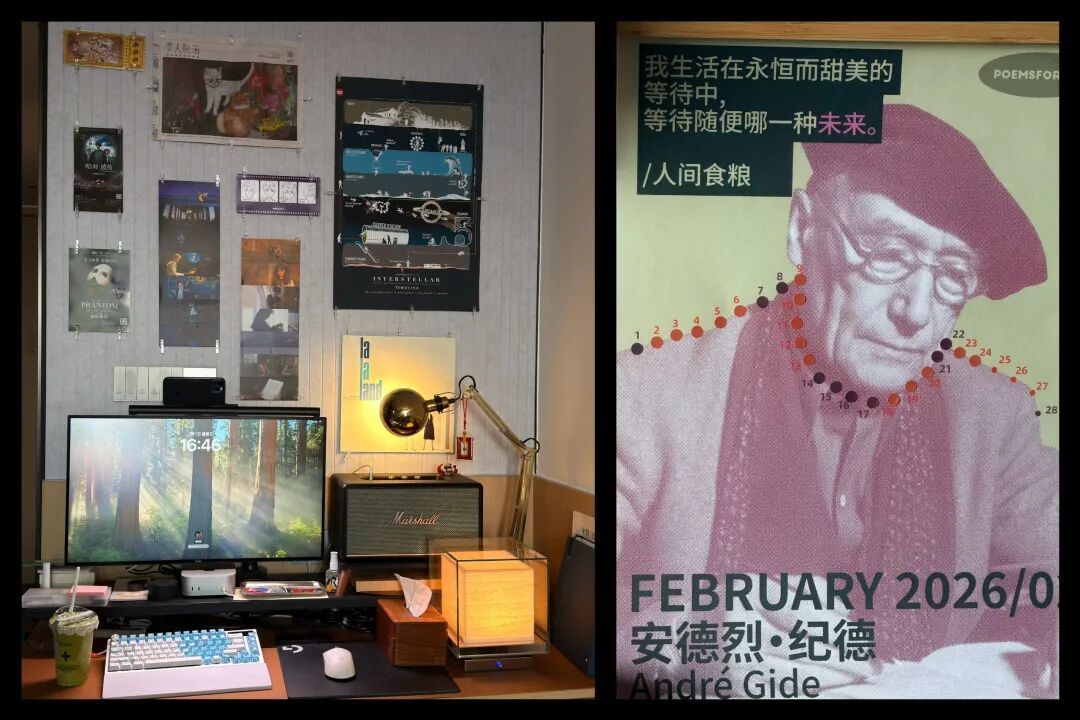
This is the seventh rented room of my life. Every opening of the suitcase is a feeler extended toward a city; every closing, a farewell spoken to some version of myself.
The plants here grow with abandon: the aerial roots of the banyans in Shenzhen Bay Park hang thick as an elder’s beard, dropping from the branches, striking into the soil, rising again as new trunks, gorging on every dram of moisture in the air; the bougainvillea that blooms across the whole city sprawls heedless, splashing over fence after fence, gaudy to the point of insolence. The people grow with the same abandon: at one-thirty in the morning in Qianhai the towers still burn with light, countless eyes glowing before their screens like nocturnal animals couched in the dark, doggedly, silently making for destinations whose end cannot be seen.
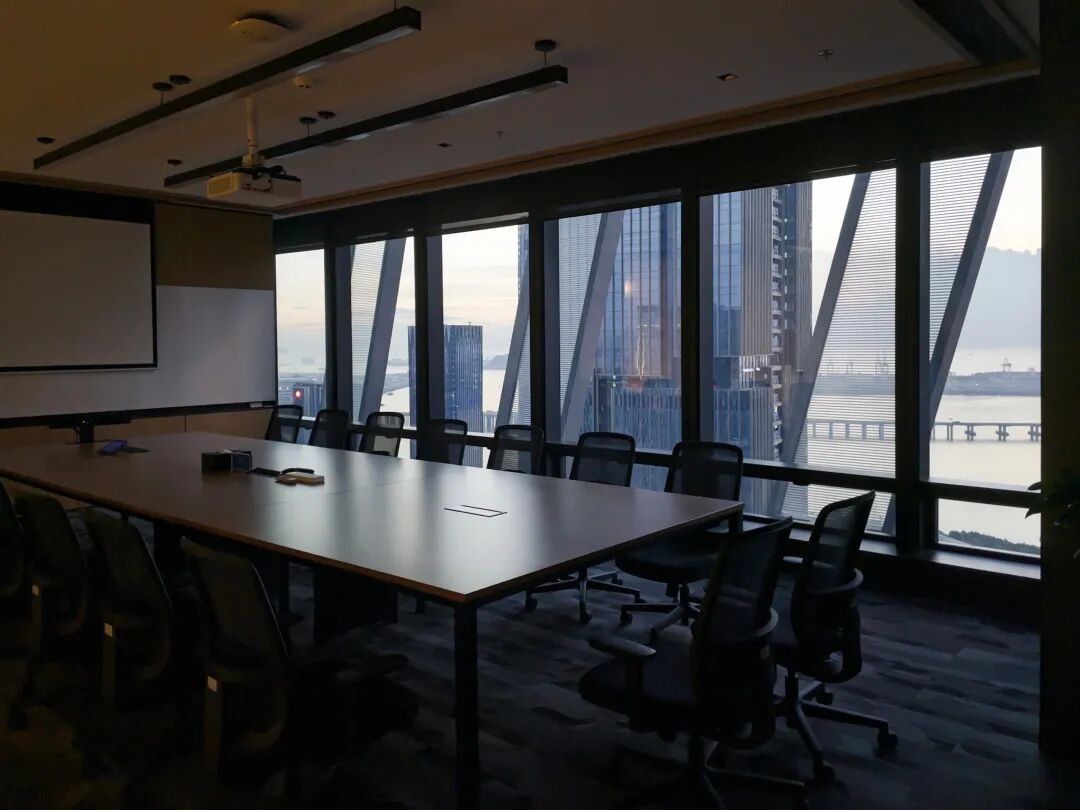
Shenzhen is too new — like a scalpel fresh from the factory, cold-gleaming, without a single scratch. It has no need of dreams or affected poetry, no need of moaning without illness; its one hard requirement is the steady intake of young, high-capacity batteries, to be machined into precise screws and gapless parts and set into the vast mechanism spinning at speed — dead center, no error tolerated. The rules are an invisible net: you need never see a marked boundary to know you are watched, at every moment, by the Ministry of Love out of Orwell’s 1984. You are to finish the correct things at nodes exact to the minute; you are to fold your feelings away inside a seemly smile. Want of agility is original sin, altruism is a shame, and any aimless slackening or staring into space is desertion from the city’s theme.
Every morning I merge into the traffic of Menghai Boulevard and watch Qianhai’s glass boxes, tall into the clouds, throw off cold splinters under a grey-white sky. The city is like an enormous precision instrument with hyperthyroidism, swallowing and disgorging young bodies without pause. In my ears, unbidden, plays a phantom of Stan’s opening newscast from Cyberpunk 2077, as if piped into the brain straight from the city’s central server:
“Good morning, Shenzhen! In yesterday’s Striver’s Lotto, the citywide average overtime clocked in at 4.7 hours — some team in Nanshan Science Park just won themselves the all-nighter gift pack again. Thanks to version iterations without end, Yuehai Subdistrict alone contributed thousands of life-extending iced Americanos. Meanwhile, over at Kexing Science Park, the numbers on the ER registration screen tick coldly upward, and the printers at the health-check clinics are tirelessly spitting out reports red-lettered with thyroid nodules. In this Night City where everything is computed to the decimal by the algorithm, a person is all too easily alienated into a line of code that can be optimized away at any time. I’m your best pal Stan. Let’s kick off another day in the city of dreams — together.”
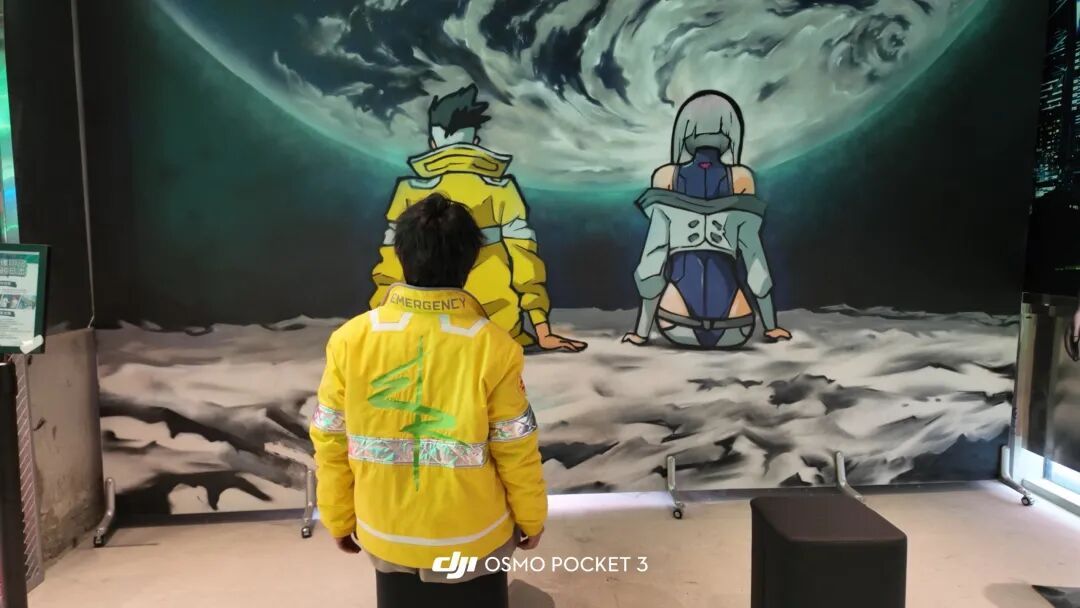
But I am not V — not even David Martinez. In the end I came barging into this hot land anyway, twisted up and stumbling, carrying my untimely man-of-letters complex and a body of unground edges, to become a corporate dog of “Arasaka,” a dissonant note in this frostless South.
From twenty-five to twenty-six, the span of this year measures a mere fifteen hundred kilometers on the map — a migration from the Huangpu’s bank to the Pearl River’s shore; but in the field of my soul’s vision, it was like humanity’s flight across the star systems in Death’s End.

III. The Grass-Snake’s Line in the Ashes • Turning to Look, the Path I Came Lies Deep and Green

At a closed-door sharing at TiMi late in the year, I heard a producer of legendary standing speak. Near the end, he turned to that line from Jobs’s Stanford address which so many people skim past: “Connecting the Dots.”
Jobs, he said, dropped out and fell for typography, went to India seeking the spirit, and, fired from Apple, turned around and made animation at Pixar — things that at the time looked wholly unrelated, even like truancy from one’s proper work, and that in the end were braided into Apple’s success. Points that seem isolated will one day be threaded by the needle in fate’s hand into a life’s unrepeatable trajectory. Just as they used to sneak games of DOTA in the office, studying tactics and design — the bosses wrote it off as slacking, yet the original L1 team’s real understanding of mobile MOBAs came precisely from those all-night sessions, from friends of different projects and wildly different backgrounds drawn together by an after-hours hobby. Those seeds of seemingly trivial behavior became, at last, the source-power of a project on the national scale.
Hearing this, my fingertip was worrying the mouse without my knowing it. In an instant my mind had traveled eleven years back, to the boy hiding in the second-floor study at home, matching wits with his parents for the sake of slipping into League of Legends in the dead of night.
I was in my first year of senior high. On the desk of the upstairs study sat a Lenovo laptop with discrete graphics. My bedroom adjoined the study; my parents slept in the master bedroom below. To bring off my secret all-night revels I tried everything: sleeping first until one or two to bank my strength, then cat-stepping to the desk; earphones sealed flush to my ears, volume set exactly where the skill-sounds could be heard and not a decibel would leak; clicking the mouse as softly as possible, lest its crisp micro-switch startle the people downstairs; the keyboard swapped for silent switches, till even rapid presses were all but inaudible.
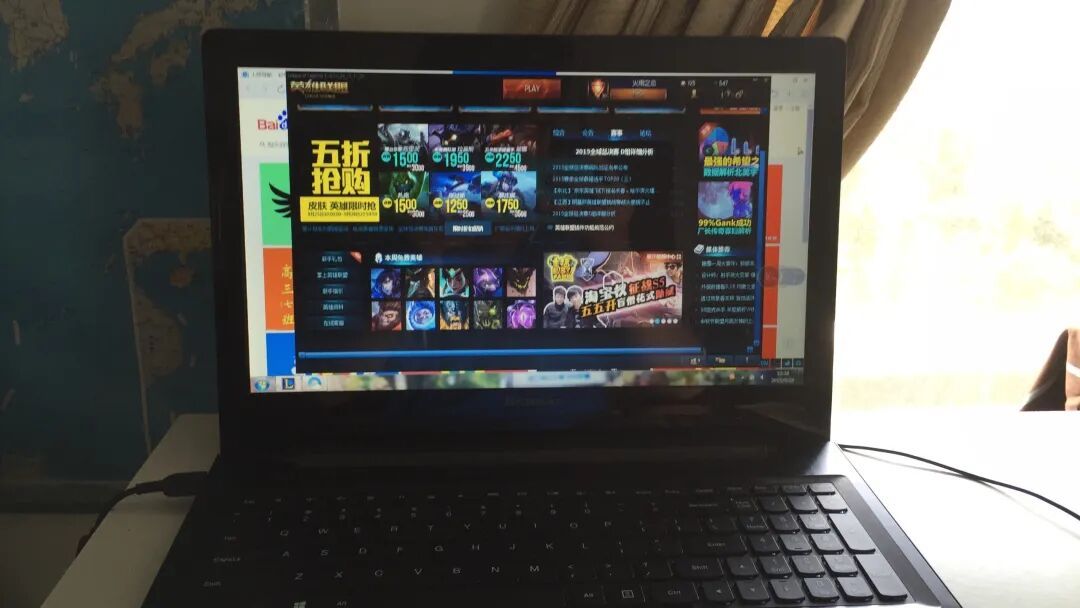
But no wall in this world is windproof. There were awkward nights when, drunk on the teamfight chess unfolding onscreen, I failed for a moment to register the background flaring bright — both rows of ceiling lights in the study snapped on at once. I tore off the earphones, aghast, to face my parents arrived on the sound and beside themselves; there followed the stern dressing-down, and banishment to rooms far from the study. Still my father judged the danger not yet extinguished, and from then on the laptop lived under a hidden martial law, a “physical seal”: each night before bed he would gravely close the machine and arrange two wired earphones at random across the lid, deliberately disordering the run of the cables, then photograph the layout with his phone. With that site record on file, he could be one hundred percent certain I had no loophole left for secret play.
But for every General Zhang Liang’s stratagem there is a ladder over the wall; my counter-surveillance instincts showed early. The cable-layout crack proceeded in three steps. First, dig out the dust-covered Canon DSLR and photograph the current arrangement in high fidelity. Next, slide two pieces of stiff card in from left and right into the gap between earphones and laptop shell, part them cleanly, and translate the whole assembly to the side of the desk. After some happy hours, replace the earphones by the same method — and finally, restore the exact routing against the DSLR’s reference frame. (As of this essay’s publication, the method remains undetected by my parents.)
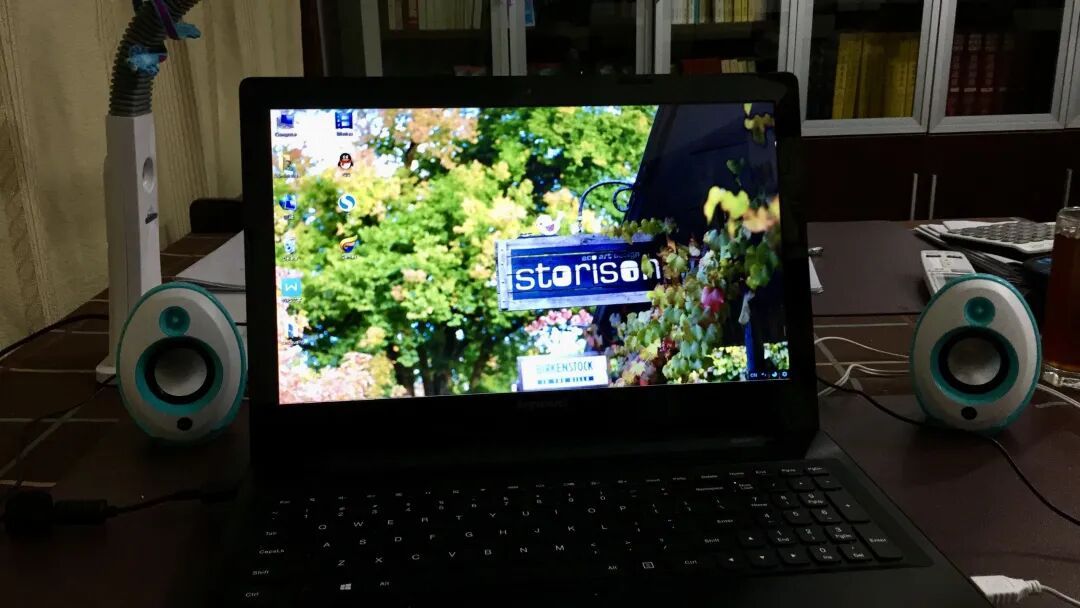
To perfect the ADC’s kiting (the marksman, the sustained-damage core), I would stay in custom games till three in the morning, grinding against dummies and bots: last-hit combos, twitch-stepped orb-walking, the timing of a teamfight entry, the finer uses of Flash. My right hand gripped that gym-equipment of a mouse so long I developed tenosynovitis; my eyes burned red-veined — and I never once felt tired.
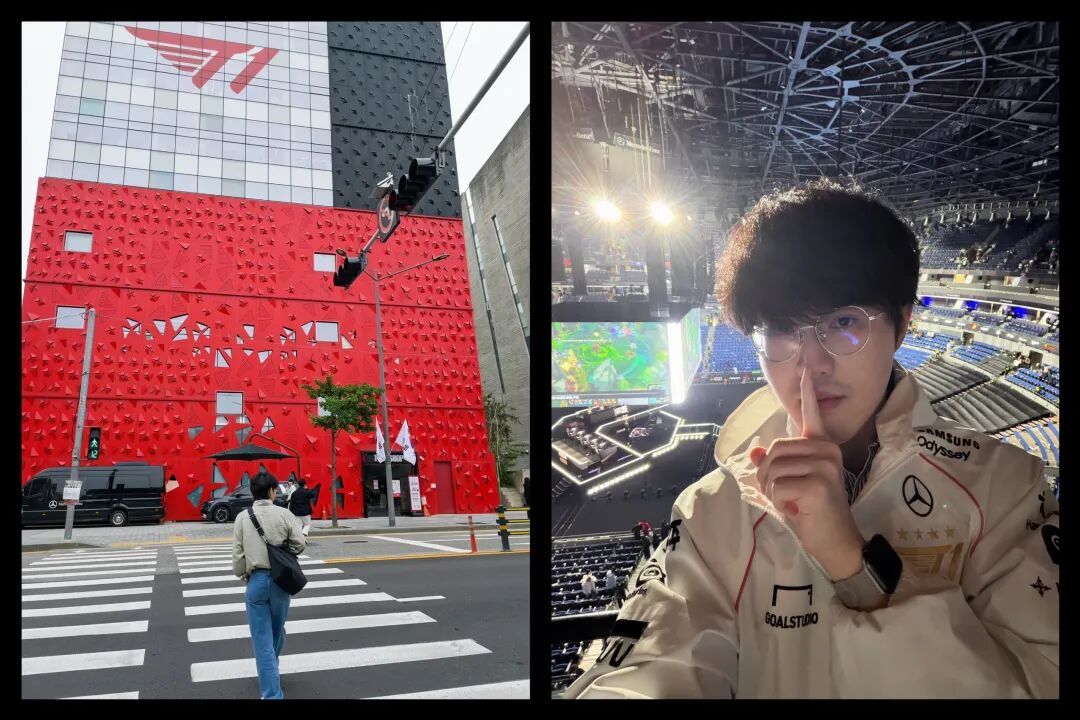
Since I was eleven, League of Legends has walked fifteen years beside me — the undisputed coordinate system of my youth. At last year’s Worlds I finally made the pilgrimage: from the T1 headquarters in Gangnam, Seoul, to the semifinal in Shanghai swept like dry rot before a gale, to Chengdu’s ✓✕✕✓✓ — watching T1 lift the cup and raise an imperishable three-peat dynasty.
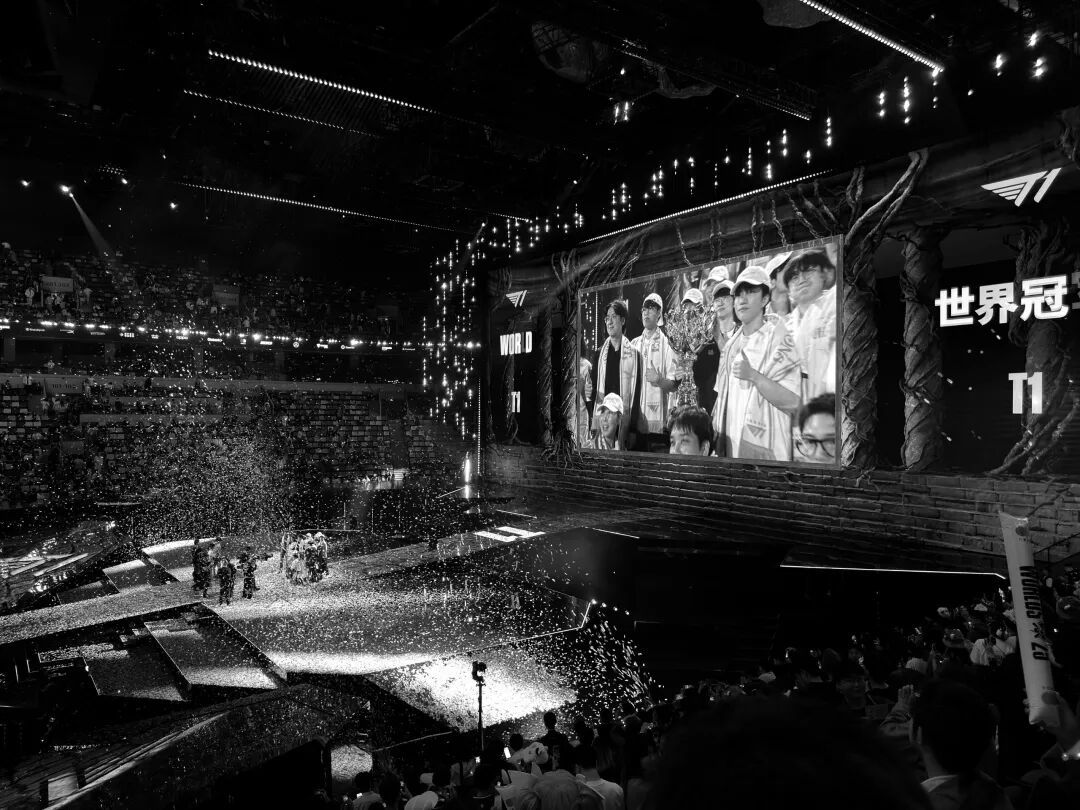
When the golden rain came pouring down from the dome of the Dong’an Lake arena, amid the deafening roar that belonged to T1, I felt my youth rounded to completion — and at the same time an enormous desolation, like the shore after the tide has gone. Watching those young faces bathed in light on the stage, I suddenly understood: my youth, together with all its memories and hours of hot-blooded miracle, of heaven repaying labor, of imperishable deeds, was being sealed forever in that golden rain, folded into this one year. I am no longer the boy who could queue ranked all night on Summoner’s Rift; I have become an adult in the stands, confirming he still has a heartbeat by way of other people’s joys and griefs.
Somewhat absurdly, only at the tail of twenty-five did I come to grasp a basic fact about my own taste: apart from the old affection for League, I have no interest whatsoever in the other rule-bound arena games, the MOBAs and FPSes; what truly sets me on fire has always been games of content. Trace it to the source and it likely runs back to the years of compulsory schooling. I once bought, in secret, close to ten phones — second-hand Androids, a Huawei Honor, an iPhone 5s. Through those inch-wide glimmers the middle-schooler I was peeped at a world gorgeous as a kaleidoscope: the vast sword-air of the academy’s second floor in Ever Night, the floating castle of Aincrad in Sword Art Online, the meteor falling on Lake Itomori in Your Name. The otaku concentration in my blood today, and the obsessive love of narrative itself, all descend from that “childhood training.”
Life after entering university was one hair-raising leap after another. Assigned in freshman year to hydraulic engineering in the civil college, sleepless nights over Engineering Drawing and Mechanics of Materials on the Xinglongshan engineering campus hardened my resolve: I changed majors, jumping from engineering into Japanese. In my second sophomore year I plunged into the finance double degree, by the lecture building and purple-leaf plums of Hongjialou, reciting New Japanese with one breath and gnawing raw the formulas of intermediate econometrics with the next, grinding the minor’s GPA by main force to first in the cohort. Then, seizing the once-in-a-lifetime window of online instruction, I threaded through eight internships spanning nearly the whole of general business — from Jinan to Shanghai, Shanghai to Singapore — and finally dove headfirst into games.
Friends say I move like a madman, apparently addicted to overthrowing my previous selves: why leave good solid engineering for a minor language; why cross-apply from a minor language into business; and having ground business to its very end, why plunge into the games industry? At such times I think of Deft’s famous popsicle speech on stream: “In this life you don’t much need other people’s advice. There are things you can’t understand until you’ve lived them.”
Chekhov said: if a gun hangs on the wall in act one, someone must fire it in act two. To explore the unknown is not to plan minutely and precisely; it is to do the things whose variance, at the scale of a life, is greater. Those seemingly unrelated choices, those persistences that looked like truancy, those isolated leaps and slides one after another — they were never whims, but foreshadowings carefully scattered through the long novel of a life, as if the ending had been written in advance by the Pen of Alesuhod out of Lord of the Mysteries. We can never string the dots of a life forward; only in looking back does the vein appear.

IV. The Feast Ends in the Vermilion Tower • Half Cockcrow, Half Hoofbeats

Yet my bewilderment has not lessened by half. After all — how many ever truly catch the deer, not knowing they dream all day of being the fish? Or as the Song monk Shi Shouduan put it in his gatha of the fly at the window: suddenly you blunder onto the road you came by, and only then see how your eyes deceived you all your life.
At the end of last September I opened, as ever, 《回家的路》, the fifth-anniversary theme of Genshin3, and at the line where 喵酱 sings “when dark clouds hide the moon,” my heart dropped without warning — and when I came to, I was in a strange city with my face covered in tears.
My rednote handle, “Ungetsu,” is taken from the Japanese reading of 雲月 — clouds racing, moonlight glimpsed and gone: like all the green old dreams that could never be seen clearly, and yet were certainly there.
Three autumns ago, newly settled in Singapore, I sat alone in a room in Jurong West sending out résumés, filling in miHoYo’s online application with scrupulous care, convinced that to enter that company and make fairy tales with my own hands would be the one redemption of this life, the terminus of all my drifting.
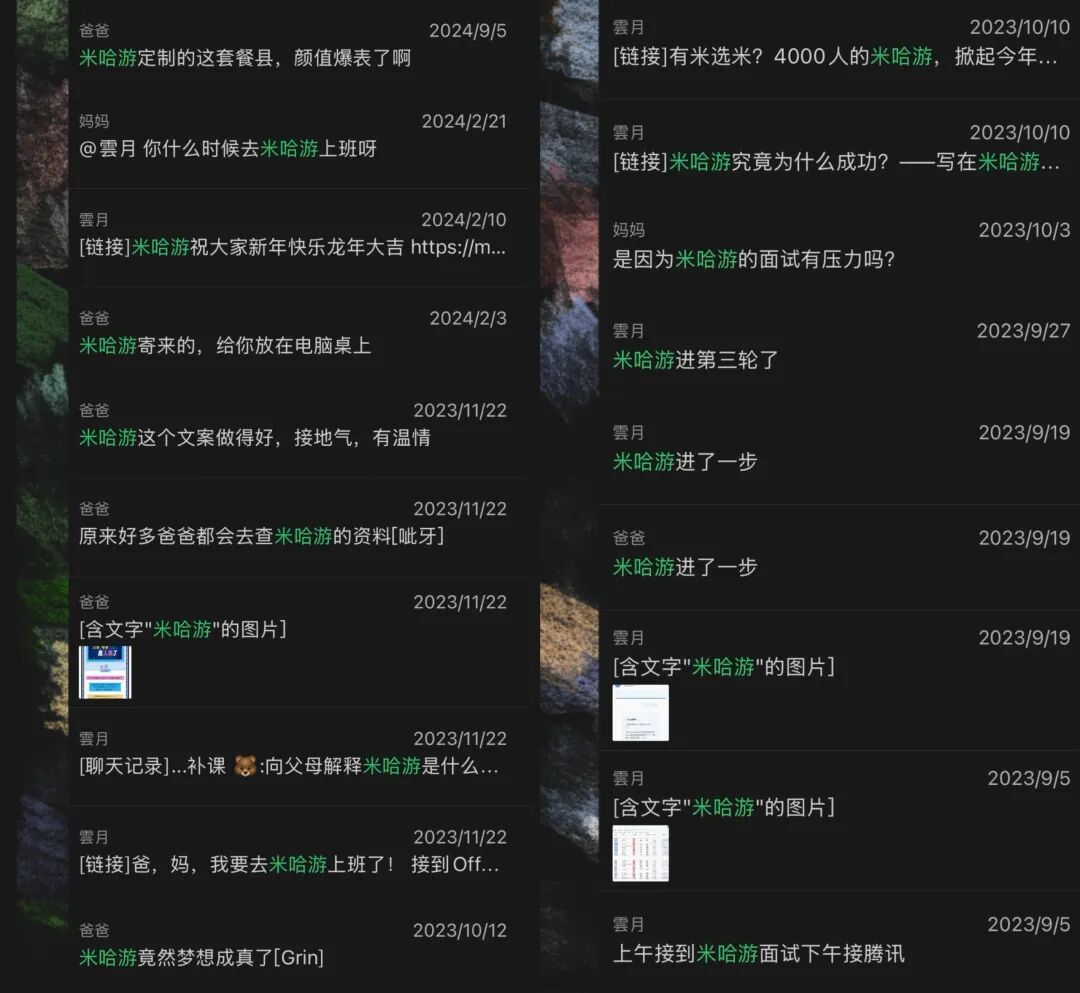
What followed was indeed a magnificent dream. Witnessed by parents and friends, I walked the tightrope on a single life and cleared it, took the admission ticket of my dreams, and returned to Shanghai. On landing the offer I wrote this in my Moments:
It has been a long time since I looked toward the future with such longing; a complicated smile keeps pulling at my mouth. I have walked a very long road, and can finally close the circle of the dream. To gather the single delight of flowers and birds; to light the long road of moon and wind. Kazuha, who has wandered the four quarters, will carry the little white cat and his friend’s Vision home to Liyue at last.
On my first day that August, I boarded the blue-and-white hotel shuttle and stepped into Guangqi G1 and G9 on Cangwu Road, wearing an Aranara-green T-shirt, waiting by the Statue of the Seven of Liyue for my boarding formalities — at last laying my own hand on the world I had longed for across six years.
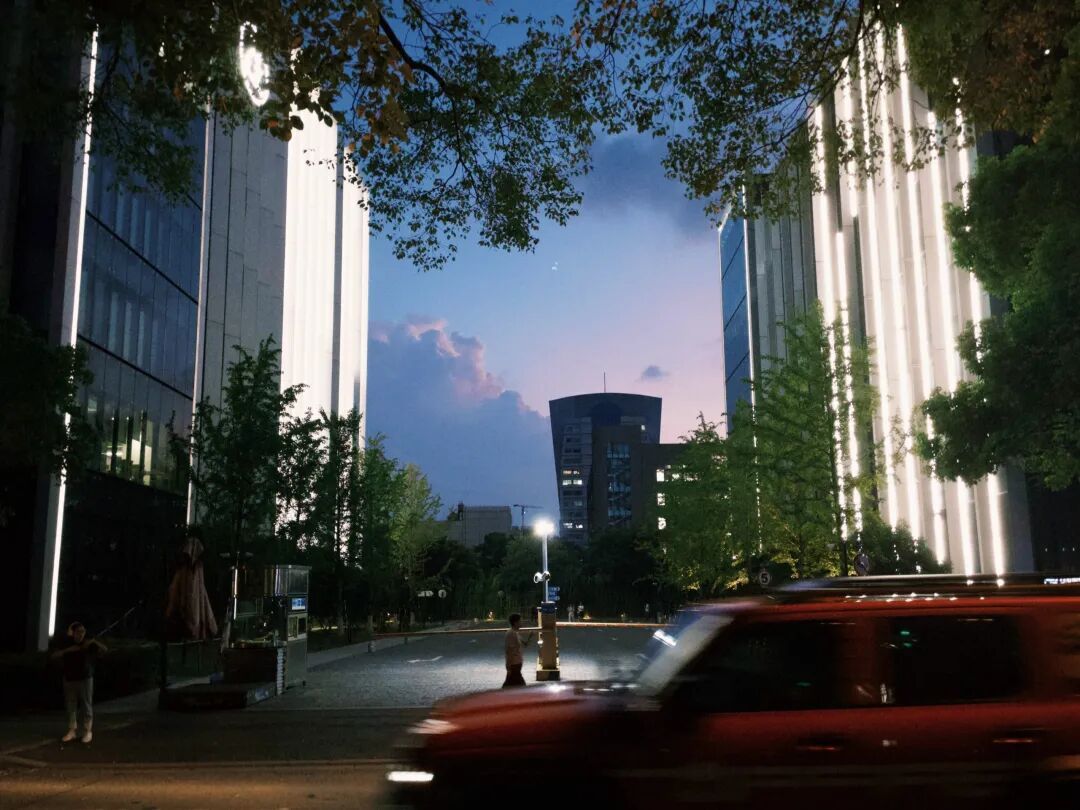
Liang Qichao once assembled a couplet from Song lyrics: “When the swallows come — how many more rounds of wind and rain can it bear? The setting sun says nothing — most to be grieved, this single sweep of rivers and hills.” And it was just as Kong Shangren wrote: I watched him raise the vermilion tower; I watched him feast his guests.
I had loved so hard, and decided this was the traveler’s terminus, the promised land where the hero slays the dragon — that on this pure ground the gauzy dreams of boyhood could be wedged inch by inch into the real. But a student’s blaze will, in the day-upon-day of disillusion and grinding, rust slowly into vacancy; and a boy’s spirit was never a renewable resource. Against the vast cold rampart of the real, the light in a boy’s eyes cools inch by inch, and dies.
On the evening I said goodbye to Guangqi, there were a few stars in the indigo canopy over Cangwu Road. I had seen that sight three times: my first day; the day we tore down Black Myth: Wukong frame by frame and I stayed at the office past midnight; and the night of the miHoYo tournament championship, on the way to the venue. I looked back at the familiar glass curtain wall. The dark was swallowing the last daylight around it, yet it never could cover the company logo on the facade — no more than it could cover my gaze. High-summer cicadas trembled in the breeze; fine crumbs of shadow swayed on that asphalt lane they never did manage to repave, exactly like my soul in that moment, with nowhere to be set down.
When the plane trees are green, partings multiply. One year’s harvest, suddenly over. Farewell, days and nights of Guangqi and Hengfu.

In the end I renounced ease and poetry after all, and plunged into the Bay Area’s clamor and utility — an uprooted plant fumbling in strange soil for a crack to root in. Only this time, stripped of the thrill of vaulting toward the next range of mountains and seas, the heart held nothing but a borderless, desolate ache. When you have schemed a grand setting-forth, woven the largest net your strength allows, believing you will haul up a boatful of starlight — and the net comes in holding one scoop of bone-cold seawater — you stand on the deck looking blankly in all four directions, suddenly not knowing where the next leg of the voyage should point. Joy spent, sorrow comes; before the words, the tears.
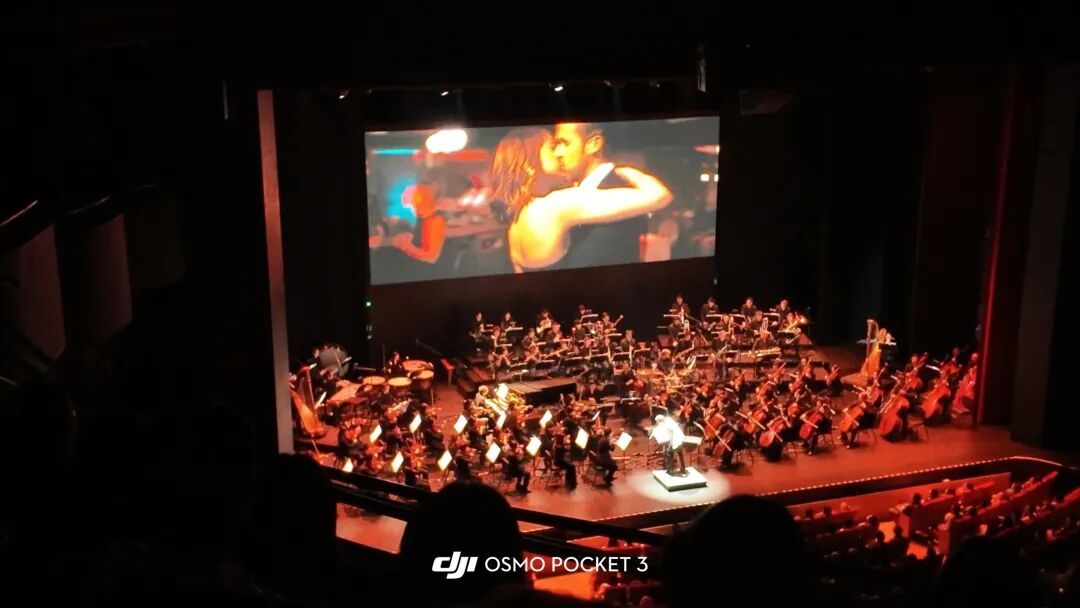
In May, in the concert hall at Qiantan, I heard La La Land conducted live by Justin Hurwitz himself. Among melodies I knew by heart, what held me longest was the closing 《Epilogue》4 — Sebastian and Mia meeting in a parallel time, each having become the better self they once imagined, and for exactly that reason never again able to coincide on one timeline. No tears; only a stillness clean to the point of cruelty — a last long look at another possibility, offered as each one’s gift of completion to the other. In the dark of the stalls I suddenly thought of the choices I had set down at my own forks; of the people and things that had each reached farther shores and would never meet again. The universe never promised us permanent reunion; it was precisely the unreserved running-toward-each-other that pushed us both into wider time. For the company I had loved so deeply, for the obsession that had burned itself through — how could it be otherwise?
I hope that many years on I can still gaze down this road, the way I came and the way home. The forest sea says nothing, yet the four seasons stand its witness; the traveler goes far, keeping Teyvat’s green in his heart. Let me close with the sentence from three years ago, where the dream began — thank you, for the one dream once allowed a subject; until the rivers and lakes bring us together again.
Only standing in the rubble of this disillusion did I truly remember the purer starting point of my senior year. This fixation on the ninth art is rooted in my Riot days: after a year and more of being racked by the disciplines of business school, walking into the fifty-seventh floor of Bohua in Jing’an felt like surfacing after a long breath held under — the elastic hours, the top-spec PC-bang with its Huangpu River view, the twin-screen desk maxed out. But what truly anchored me in this industry was touching, for the first time, the meaning of the work itself.
In the vanity fair of finance and consulting I had mostly taken part in the transfer of tangible wealth, or served as the disposable human battery of high-priced engagements. In games I genuinely took part in creating an intangible value: players’ joy. That summons out of Eden once made me sever, without hesitation, all the sunk costs of my business-school scrambling and swing the bow clean around. It is because I was once lit by that beam that now, inside a system that prizes outcomes and monetized conversion above all, I so often feel torn in two.
Through these years of hair-raising jumps — short-cycle results, multi-stage leaps, reference frames detonated one after another — even as I harvested so-called rapid growth, I perceived ever more soberly one chilling fact: if a life carries a “stamina bar,” it is surely conserved, and finite. For me, the unrenewable pure energy of a life has been overdrafted too fast in these years of high-intensity transit. Which also ordains that for people like us, the disenchantment and disillusion that follow the touching of a set goal will be crueler by far than most people’s.
I began to re-examine the “optimal solution” I had held as scripture — chewing slowly over the blurb of Seichō Matsumoto’s The Castle of Sand: “A solitary child, by a silent river, builds a vessel of sand. Just as it is finished, the great rain arrives unannounced.” If the coordinate system of a life holds nothing but climbing or freezing of caste, then the journey’s tolerance for error is indeed suffocating. Herded by the whip of the social clock through cautionary tales of downward slide, people meekly hand over the golden years of their greatest capability, in exchange for one secure serial number and notch in the social scale.
And yet this long and airtight training omits a single link: people die.
Once you truly accept the certainty of death, you see that caste and wealth, unless cashed out — in your own generation, while the body is still warm and quick — into the felt quality of living and the experience of a life, mean nothing at all. When a person’s absolute worth is pried apart, by force, from their worldly net worth, and career success is demoted to merely one instrument of a vivid life, the tolerance of a life spreads open like wilderness to the ends of the earth.
If life truly is a race, it must be a race to see who becomes themselves first.
Since coming to Shenzhen, the high-RPM beast-of-burden life has kept its own clock — precise, pitiless, slicing lives by the quarterly report. Only when I tried to wrench my eyes off the glass curtain walls and the hollow grand narrative did I discover another timekeeping running outside the window. The orbit of the so-called big factory is, amid the enormous cooking-smoke of the human world, pitifully small.
At six in the morning the little salt-baked-chicken stall rattles up its shutter as the owner readies the fire. From ten to eleven the children of the estate pour out in a body and occupy the slide beyond all passage. At half past two, under a vicious sun, delivery riders done with the lunch peak tuck their motorbikes into the tree-shade and sleep in snatched minutes, slumped over the handlebars. At four, when the nearby primary school’s bell rings, a crowd of picking, choosing schoolchildren condenses at once outside Lawson and the snack shop. The clocks of most people in this city run, in truth, far earlier than mine.
In this city without bicycle lanes, rental agents gun their e-bikes all the way from Longgang to Futian — a commute not wild but merely a coarse inevitability squeezed out by the cost of staying alive. Stray cats and dogs patrol their territories by instinct on the southern streets. And the osmanthus at the roadside breathes out its dense sweetness all four seasons; even in the nominal dead of winter, pressed by the cold air, the scent only thickens — like some stubborn proof that refuses to disperse.
I watch the green outside the window that never once is defeated, watch these people living inside a true rising and setting of sun and moon. Theirs are the most concrete mornings and evenings.
What Great Expectations, in the End, Are Worth Missing All Four Seasons For?

Postscript
Twenty-six: a backward glance across a quarter of a century.
At Christmas, in a hotel room in Wanning, Hainan, I set down a body’s worth of weariness — and in the instant the door swung open, 《Slow Summer Eve》5 was looping: the music of Reze and Denji’s briefest, gentlest stretch of time in Chainsaw Man. Warm-toned streets; two people each keeping a secret from the other, walking with all seriousness down a road fated not to continue. The whole piece is dreamlike, and golden, and cruel — because that happiness had grown, from the very first, in the soil of farewell.
I stood where I was, not knowing whether I felt spared or bereaved. Perhaps the days and nights of Guangqi and Hengfu were happiness in exactly this sense — it truly existed, it burned hot enough; only fate had measured it as just such a passage: not long, but exactly enough that many years later, pushing open some door, I could still be struck down by a song.
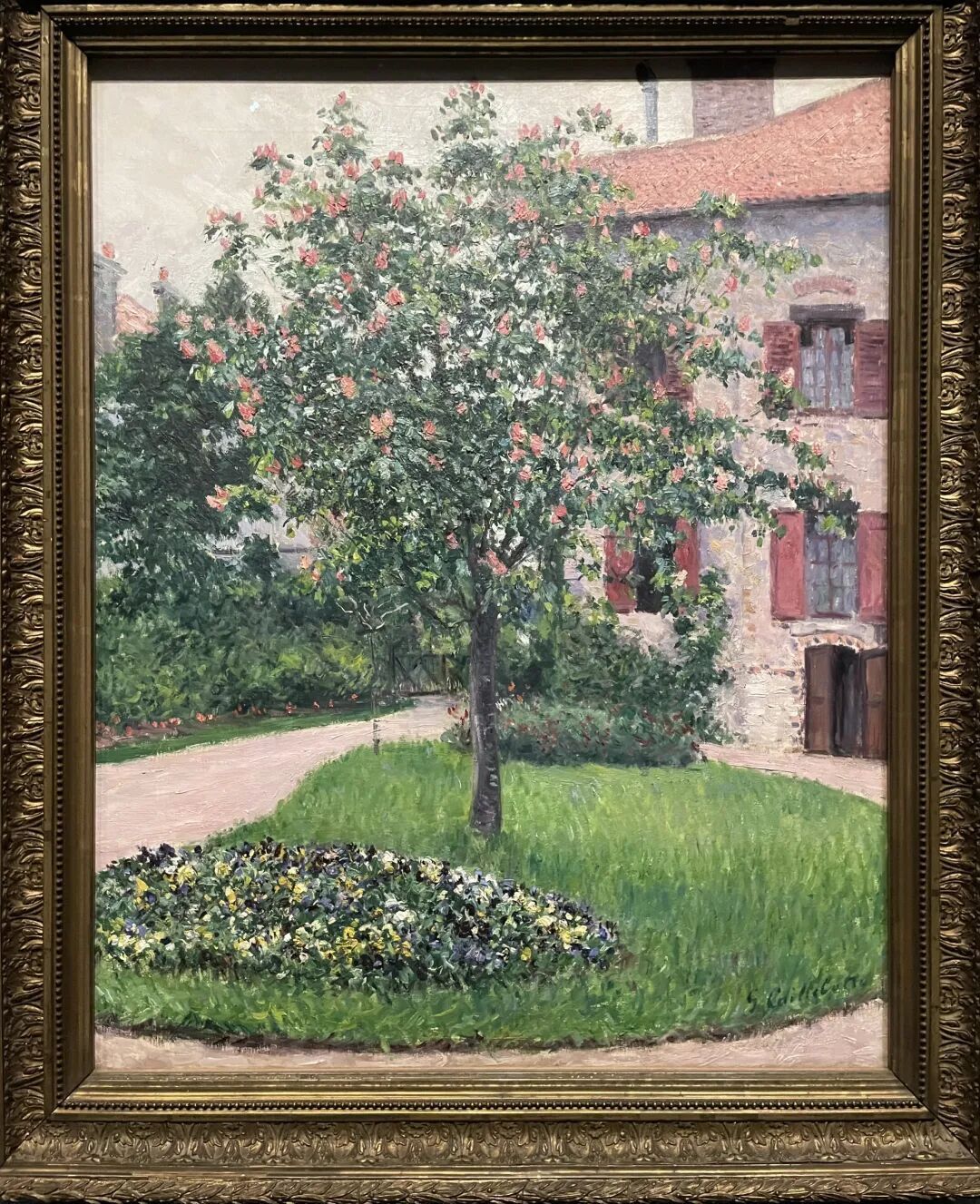
And suddenly I remembered the Gustave Caillebotte I had seen half a year before at the Orsay exhibition in the Museum of Art Pudong — The Apple Tree in Blossom: branches crowded thick with white clusters, a great cloud-shadow lying across the canvas, as if the whole of spring were being held in someone’s palm, not yet willing to let go. In that moment, for no reason I could name, I had the illusion of standing beneath the purple-leaf plum before Building 7 at Hongjialou, Shandong University.
Though it was a southern winter night. Though thousands of kilometers lay between. Though that tree was already seven years in the past.
This, I suppose, is what Márquez meant by the days remembered for the telling — we think we have remembered certain things, when all we have remembered is the mark those things left on us. The shape of that purple-leaf plum is a boy in some year’s spring, reciting his lessons on the flagstone path, waiting in trepidation for the result of a major-transfer interview, newly escaped from the Xinglongshan campus.
In The Apple Tree in Blossom, Caillebotte painted no sky — only the flowers, the branches, and that wide-spreading white. Spring has nowhere to flee. The four seasons will come, after all.
雲月さん、二十六歳のお誕生日おめでとうございます。

First published on the WeChat column “Juanmo Xuan” (2026-03-06): original