No.001
Those Who Carry Firewood for the Many Must Not Be Left to Die in the Snow.
Translated from the Chinese read the original
In the thick of the summer movie season, I came back from 我不是药神, took off my glasses, and slumped bonelessly on the sofa, scrolling through WeChat Moments — never expecting to find several of my female friends, just out of 动物世界, the other sensation of the season, rapturously fawning over its pretty young idols and fashionable leading men, their every word brimming with staunch devotion to the buttered-popcorn school of taste.
动物世界 and 我不是药神 stand to each other as 小时代3 and 平凡之路 did in their day, laying bare two attitudes toward the work of film, two tastes in what one chooses to watch, two altitudes of spirit before the road of life. Now that popular taste is drifting toward the latter, and works grounded in reality have at last come into the common view, to choose the virtual carnival of an 动物世界 at such a moment may well be a trampling, an abasement, of one’s own taste.
All of the above is no more than my shallow, unschooled opinion of today’s film market. Let me borrow a short review from Douban: “Films that strike at reality on this level — every one more is a gain, every step forward counts.” In the long holiday after the college entrance exam, rather than steeping day after day in virtual worlds and sour-smelling quilts, why not crawl out of the grave of youth and look at the reality of this society — look at what deeds of righteousness the people of this world have done to change it.
It was plainly not the season the old verse calls “the Fire sinking in the seventh month” (七月流火), yet as I watched, once the social ills the film pointed to came clearly into view, I felt a thread of icy shivering in the blazing summer heat. The true success of 我不是药神 lies in never aiming its critique squarely at any one social group. Under the full weight of human society’s complexity, every party stands on the moral high ground of its own dimension, each holding a justice that looks one-sided and is in truth without recourse. 徐峥’s cleverness is that he simply tells a story, and tells it well, pushing the whole verdict of responsibility onto the audience, leaving each stratum of society to its own judgment. The vantage differs, so the experience differs; all that is the same is that everyone’s tears come down like rain.
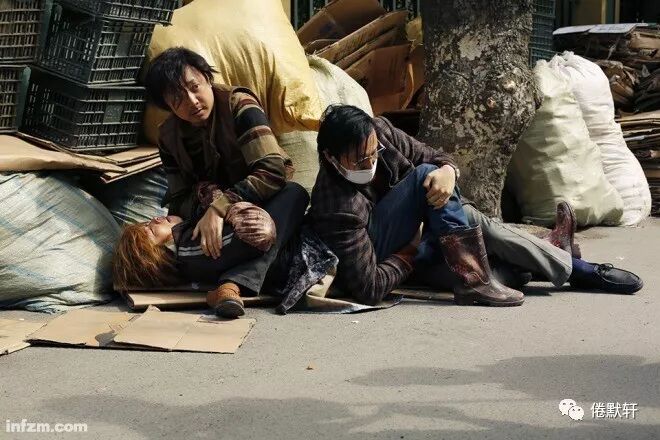
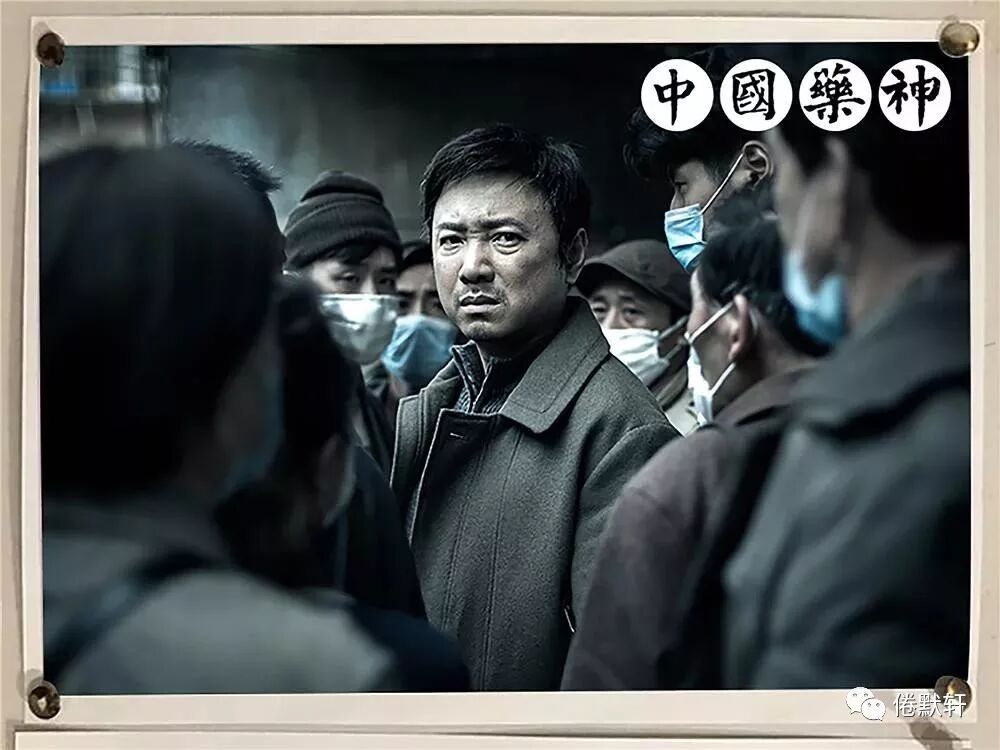
程勇 would sooner lose several hundred thousand a month than leave the nation’s patients unsaved; smuggling is against the law, yet his acts are clothed in the public’s gratitude and admiration. 曹斌 holds the iron-faced high ground of the law enforcer, yet cannot keep back a kindred feeling for the brave man; when a good man’s instinct collides head-on with professional duty, even an officer of peerless nerve can only announce that he is giving up the case. And the patients’ one line, soaked in bitterness and helplessness — “What family has never had someone ill? Can you guarantee you will never fall sick?” — strikes to the very floor of the soul and sets off the film’s tear-jerking charges one after another.
The only villains in the film, it seems, are the Swiss pharmaceutical company and its profiteering Chinese agent, who appear to wear the face of every evil — the fountainhead of all wrong. When the agent in his gold-rimmed glasses proclaims again and again that counterfeit drugs kill, that one must buy the genuine article at 40,000 a bottle, the audience’s fury seems to find its one and only outlet: the stench of capitalism gathers to a single point, anger finds its release, and the problem seems solved in earnest.
But is the problem truly solved? Is the profiteer truly so vile that he deserves the reproach and censure of the entire drug market, and then the frantic pasting-on of the label “careless of human life”? To quote the defense given by the company’s lawyer in the film: “What truly saved the patients’ lives is still the formula of the genuine drug.” Statistics show that a single new drug demands 2 to 3 billion US dollars in research and development. The patent term on an original drug generally runs 10 to 20 years; deny the drugmaker its interval of market monopoly and sufficient profit, and it will find little will to go on developing new medicines. Once new drugs cease to be developed and more of the newer diseases go without effective treatment, how could the toll of lives across the whole world be weighed against the several thousand people 程勇’s purchasing runs could save? Then, too, so that the film might steer its problem toward a momentary resolution, a merchant in the role of scapegoat naturally had to be born; in reality no dealer’s profit runs so high — resale upon resale, tariff upon tariff, had long since raised the price to a forbidding height. A student of pharmacy put it this way: “The 陆勇 case is a topic our courses in pharmaceutical administration return to again and again: which, in the end, weighs more — the right to life, or the right of patent? We cannot give an exact answer ourselves. The future of the industry lies in patents, yet medicine is a special commodity, and its purpose is to save. Drugs and ethics — it leaves one torn.”
By this point it is plain that the social question 我不是药神 raises is no mere banner of absolute justice after the manner of Schindler’s List; it is a three-dimensional hologram of a complex social reality, with all its rights and wrongs handed over, whole, to viewers possessed of discernment.
Yet however that may be, in this age of plural values a small number of people will inevitably sneer at what 程勇 did, calling it the sacrifice of the greater self to complete the lesser, a childish, idealizing plea that disregards the law and runs on feeling alone. Granted, this is one of the most difficult questions in human history; but in his essence 程勇 is perhaps only a man with a plain and modest wish, trying to make the world within his sight a better place. To press the weight of numberless cynical propositions down upon him is to lose, in truth, all sense of proportion.
There is one puzzling passage in the film: amid a fog of insecticide, 程勇 sees the statue of a god, a weapon in its left hand, a severed head and a bowl in its right. It is, in fact, the Indian goddess Kali. Kali once battled a demon; but every drop of the demon’s blood that reached the ground turned into a demon anew, so Kali had no choice but to hold out a bowl and catch the blood as it fell. When 程勇 takes up selling the drug again, he is like a god wrestling the demon of disease, holding up the hopes of many. (The material on Kali is drawn from Douban and will be removed upon request.)
As The Three-Body Problem insists again and again: survival is not a thing owed to us, but a stroke of luck. And yet, when men like 程勇 walk bent beneath a load borne for your sake, carrying firewood for the many so that thousands upon thousands of ordinary people may live on in a warm greenhouse — watching the bloodstained footprints they leave in the snow, we must remember:
Those Who Carry Firewood for the Many Must Not Be Left to Die in the Snow.
At the end of this post is 只要平凡, the promotional song for 我不是药神 — a melody that strikes straight at the heart.